Agents on the Grid: Two Weeks of Data Prep, Now Hours
AWS and Duke Energy cut grid-interconnection data prep from two weeks to hours with AI agents, while engineers keep the final call—a division-of-labor design worth copying.
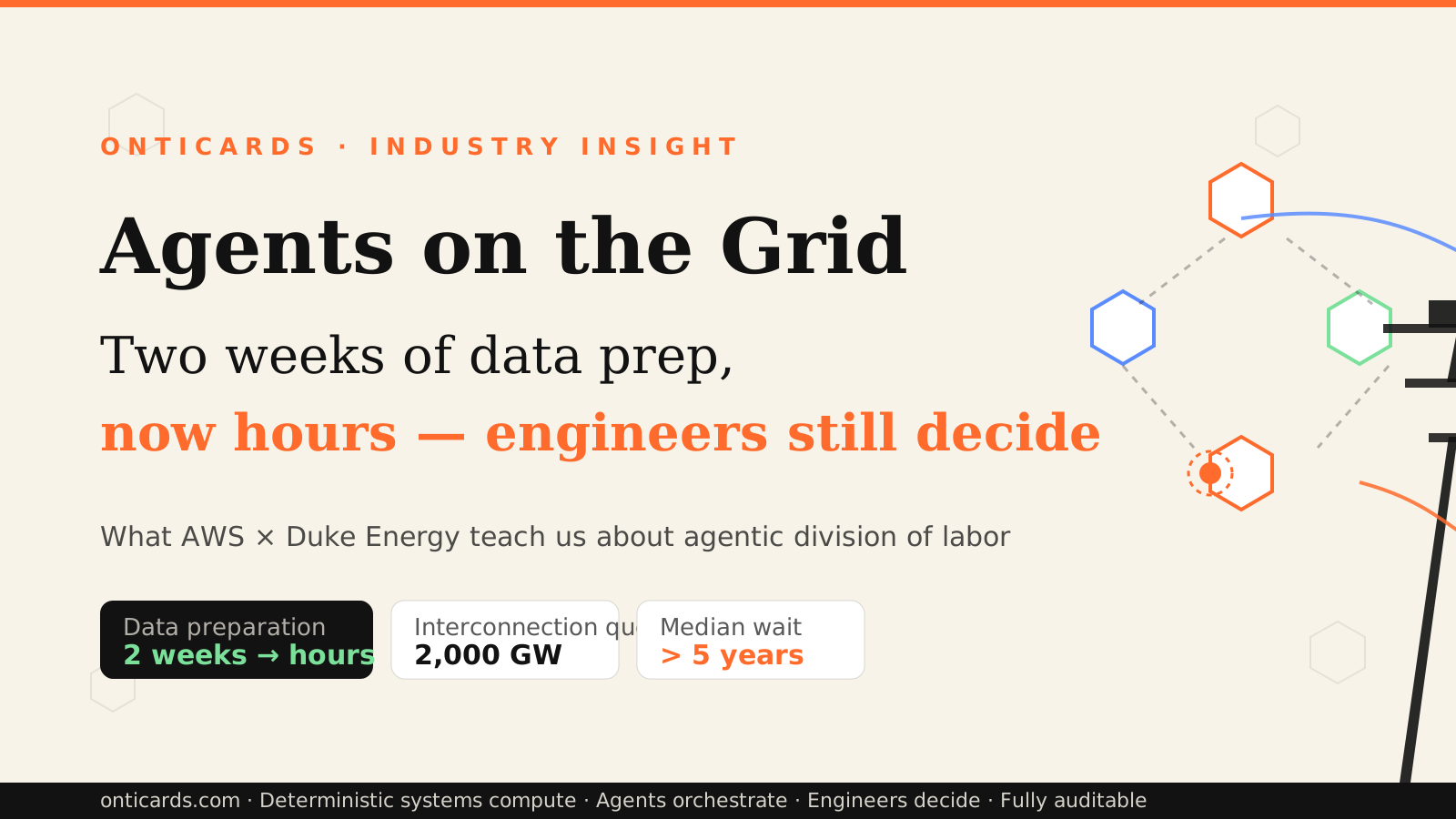
On September 17, AWS announced Agentic Grid Planning in Houston, a program that brings specialized AI agents into the interconnection studies that utilities run before any new generation or load touches the grid. Duke Energy, the launch collaborator, posted the first result: data preparation that used to take two weeks of manual work now takes hours. The real lesson for enterprises, though, isn't the speedup—it's the division of labor. Simulation software handles deterministic modeling, agents run and coordinate the workflow, engineers make every final decision, and the whole chain leaves a versioned, reviewable record.
2,000 GW Are Queuing, and There Aren't Enough Engineers
The backlog explains the urgency. According to Lawrence Berkeley National Laboratory, more than 2,000 GW of generation and storage projects were waiting for U.S. transmission interconnection at the end of 2025, and projects that reached operation that year had spent a median of more than five years in the queue. In ERCOT alone, large-load interconnection requests hit roughly 410 GW by March 2026.
Meanwhile, demand for interconnection studies is outpacing the supply of qualified power engineers. FERC Order No. 2023 adds regulatory pressure by requiring first-ready, first-served cluster studies with hard deadlines. As Joseph Santamaria, GM of Energy and Utilities at AWS, put it: scaling manual processes alone cannot solve this.
The Design: Deterministic Work Goes to Deterministic Systems
The most instructive part of the announcement is how tightly scoped the agents are. Three lines, cleanly drawn:
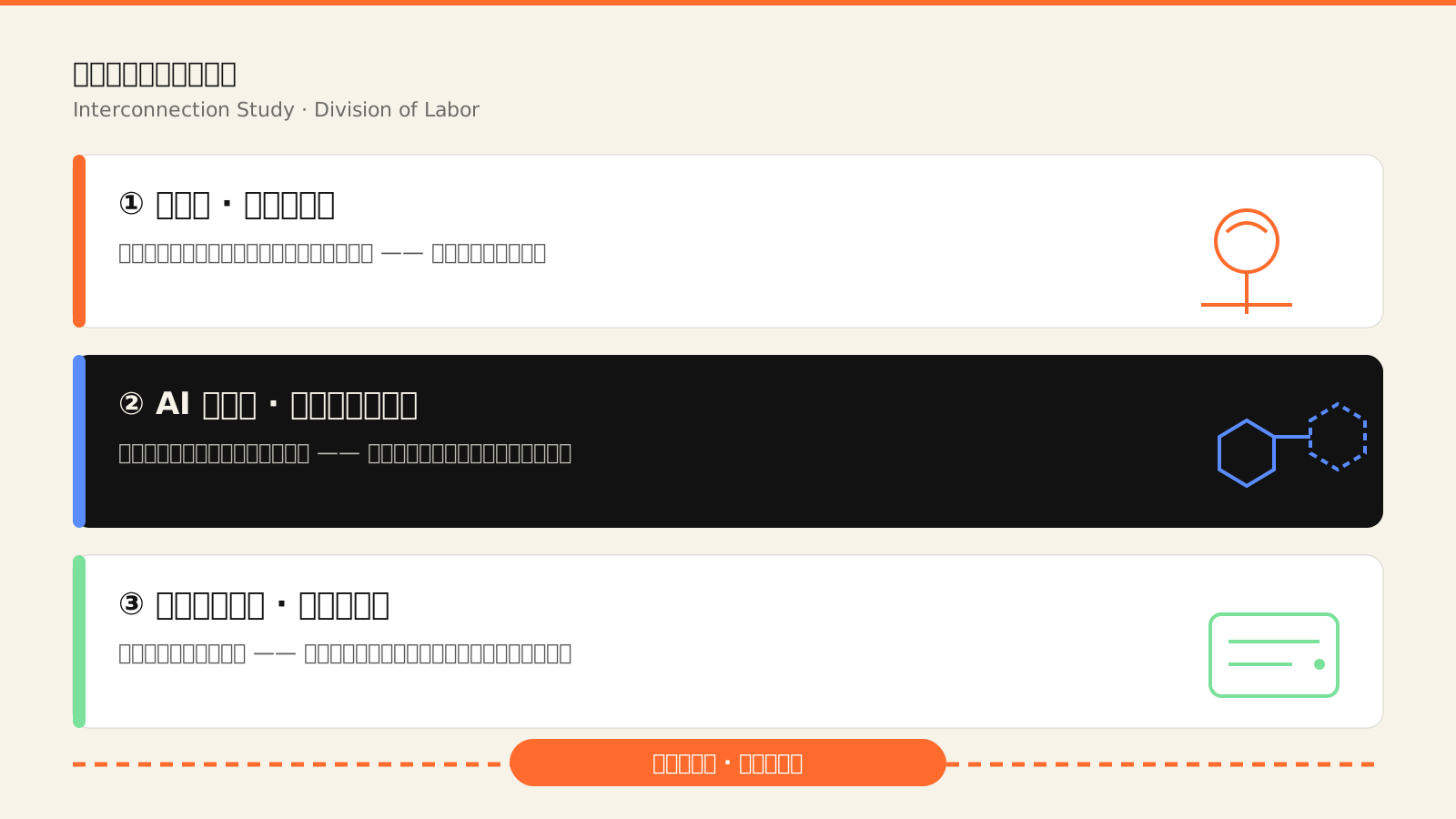
- Physics-based simulation software does the deterministic modeling. Power-flow and stability analyses stay with the simulation tools and grid models engineers have trusted for years. Agents never touch the physics.
- AI agents run and coordinate the workflow. Data preparation, analysis execution, and multi-scenario orchestration—the "glue layer"—go to agents that operate on the models, scripts, and engineering standards teams already use.
- Engineers keep the final call. In Duke Energy's words, "our engineers lead the work and make all final engineering decisions, while AI agents provide them with more time for engineering judgment and review."
Crucially, everything runs through "auditable and codified agentic workflows." That is a fundamentally different architecture from handing the whole problem to a single-model black box.
The Overlooked Protagonist: Data Prep Was the Bottleneck
Notice what got compressed from two weeks to hours: not computation, but data preparation. That is the most common failure point in enterprise AI today—models aren't short on capability; they're short on machine-ready, consistently defined data.
Two other announcements the same week reinforce the point. Acceldata launched xFactory on the argument that agents access data at machine speed while enterprise data stacks were "designed for human-paced work"—so governance, lineage, and entitlements must be enforced at runtime, not by hand. At a CIO summit in Beijing, Transwarp went further: the consumer of data is shifting from humans to AI agents, and AI programs are pivoting from model-centric to data-centric.
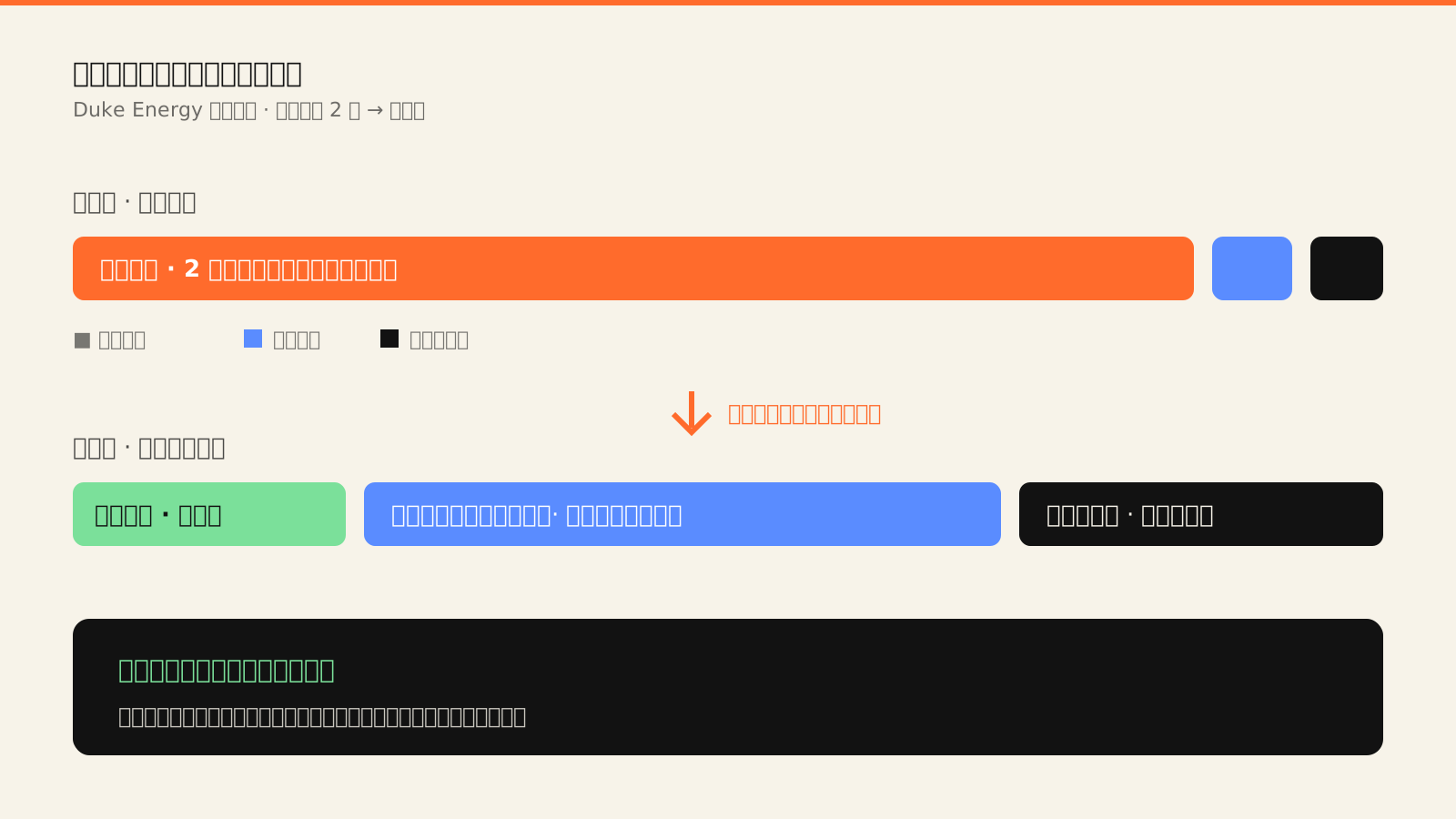
| Dimension | Human-paced data stack | Agent-paced data foundation |
|---|---|---|
| Who queries | Analysts write SQL, export reports | Agents call data on demand, at high frequency |
| Metric alignment | Meeting notes and convention docs | Unified semantic layer, validated at runtime |
| Governance | Upfront approvals, spot checks | Lineage, entitlements, quality rules enforced automatically |
| Typical bottleneck | Data prep dominates project time | Once data is ready, speedup is immediate |
Duke Energy's two-weeks-to-hours is what it looks like when data preparation switches from human pace to agent pace.
Where Trust Lands: Auditability and Private Deployment
The gating factor for enterprise AI is shifting from capability to trust. The same day, Cisco and NVIDIA announced they are bringing Splunk's AI capabilities to on-premises and air-gapped environments—explicitly because customers need to confirm AI is governable, affordable, and keeps data in bounds. On the model side, China Telecom's newly released Xing4.0-29B-A4B (29B total, only 4B active parameters) runs on consumer-grade GPUs, lowering the bar for deployments where data can never leave the building.
Three threads, one conclusion: auditable workflows, data that stays in place, and lightweight private deployment are becoming the default requirements for agents in serious production environments.
Three Checkpoints for Your Own Rollout
If your organization is evaluating agent deployment, Duke Energy's case offers three questions worth copying:
- What is your "simulation software"? Every domain has deterministic systems that must be kept—general ledgers, simulation engines, compliance rule books. Agents should orchestrate them, not replace them.
- What share of your project time goes to data preparation? If it's over half, fix the data foundation first: define core business objects as semantically unified, machine-callable data assets before adding agents.
- Does every step leave a record? When pilots meet regulators and auditors, what survives is the versioned trail and the permission boundaries.
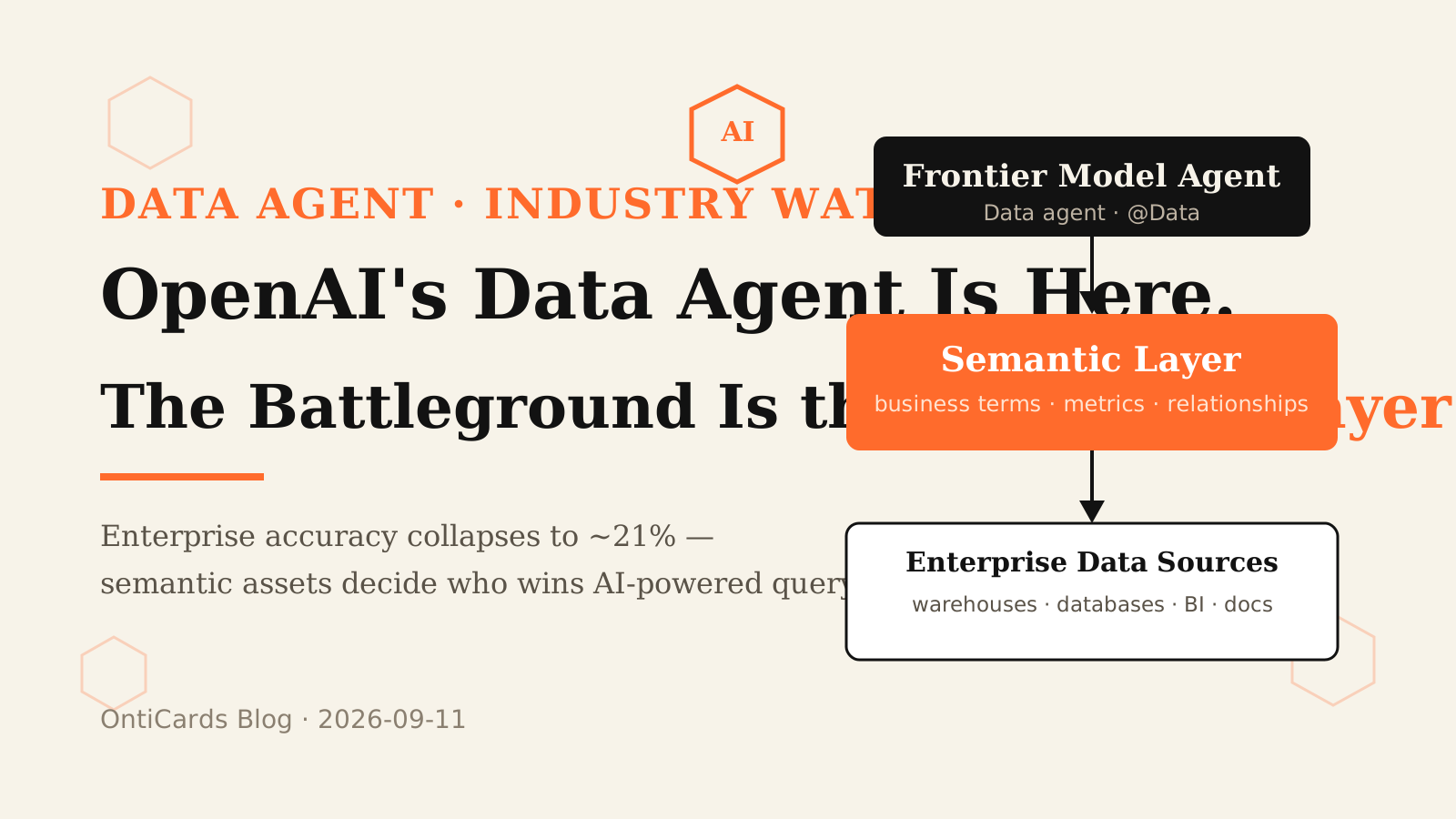
This maps closely to how we think at OntiCards: a data adapter layer keeps data federated and in place, a semantic card layer turns business objects into machine-callable data cards, and the agent ecosystem orchestrates skills and workflows with every step traceable. The full path from equipment telemetry to dispatch decisions is exactly the kind of scenario we validate with customers—see our industry solutions, or our earlier takes on the shift of value from models to data context and why agent auditability is non-negotiable.
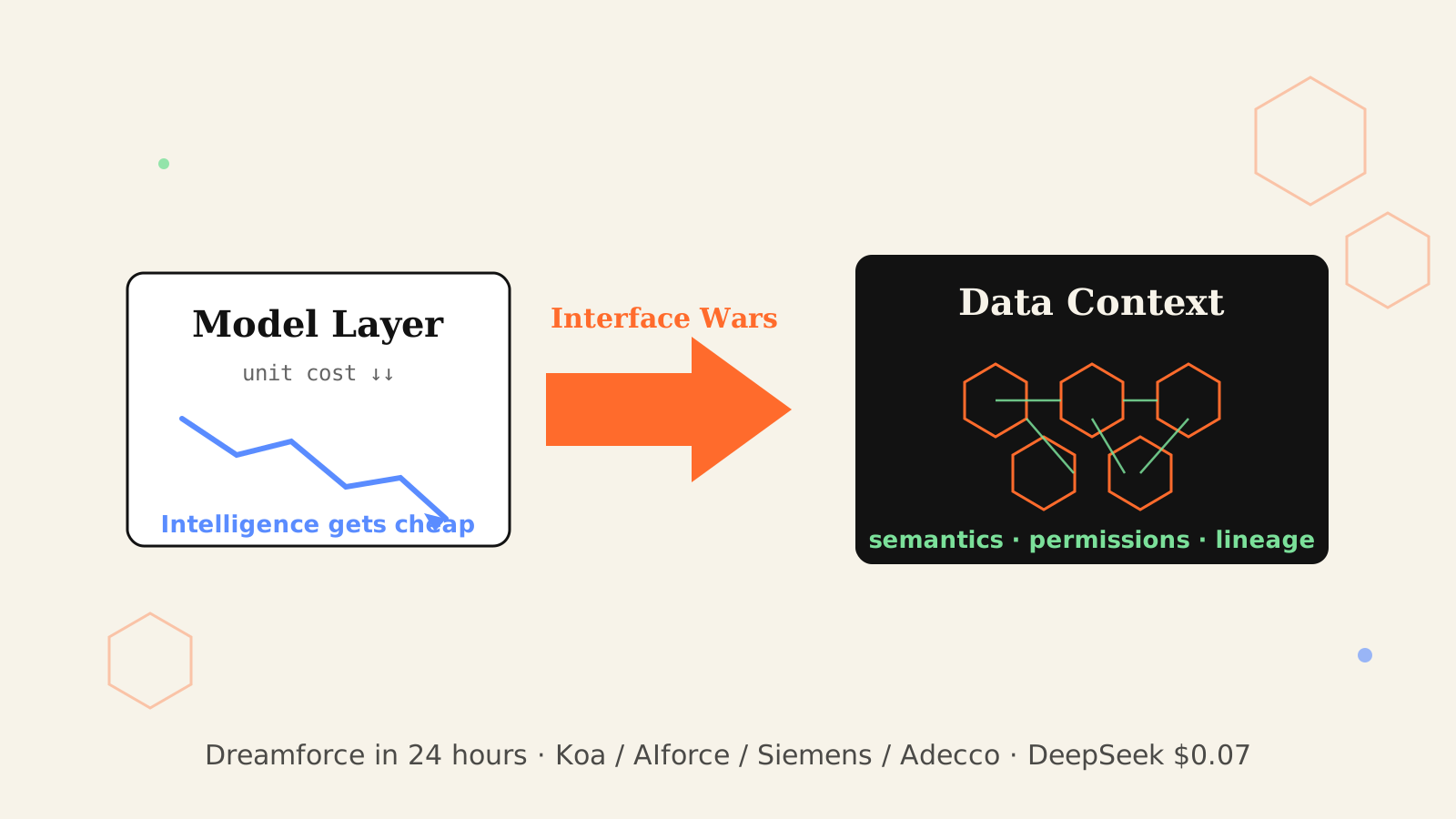
The second half of enterprise AI won't be won by whoever has the strongest model, but by whoever's division of labor and data foundation hold up under audit. The grid—the most deterministic industry there is—just published the playbook. Everyone else has no reason to wait.
References
- AWS Launches Agentic Grid Planning Program to Accelerate Interconnection Studies — AWS News Blog, 2026-09-17
- Acceldata Launches xFactory for Building Governed AI Applications From Business Intent, on Federated Data — Business Wire via Morningstar, 2026-09-17
- Cisco and NVIDIA Expand Collaboration to Bring AI Agents to Splunk On-Premises Customers — ifeng.com, 2026-09-17
- China Telecom Releases Xing4.0-29B, Its First Full-Stack Domestic Lightweight Agentic Model — Toutiao, 2026-09-17
- 2026 Autumn State-Owned Enterprise CIO Summit Concludes in Beijing — Yesky, 2026-09-17
- Marketing Tech Vendor Highlights Enterprise AI Adoption Barriers at SOE CIO Summit — Sina Finance, 2026-09-17