Interface Wars: Cheap Models, Priceless Data Context
Koa, the AIforce layer and two agent rollouts landed in one day; DeepSeek cut task costs to $0.07. Models are commoditizing — data context is the new moat.
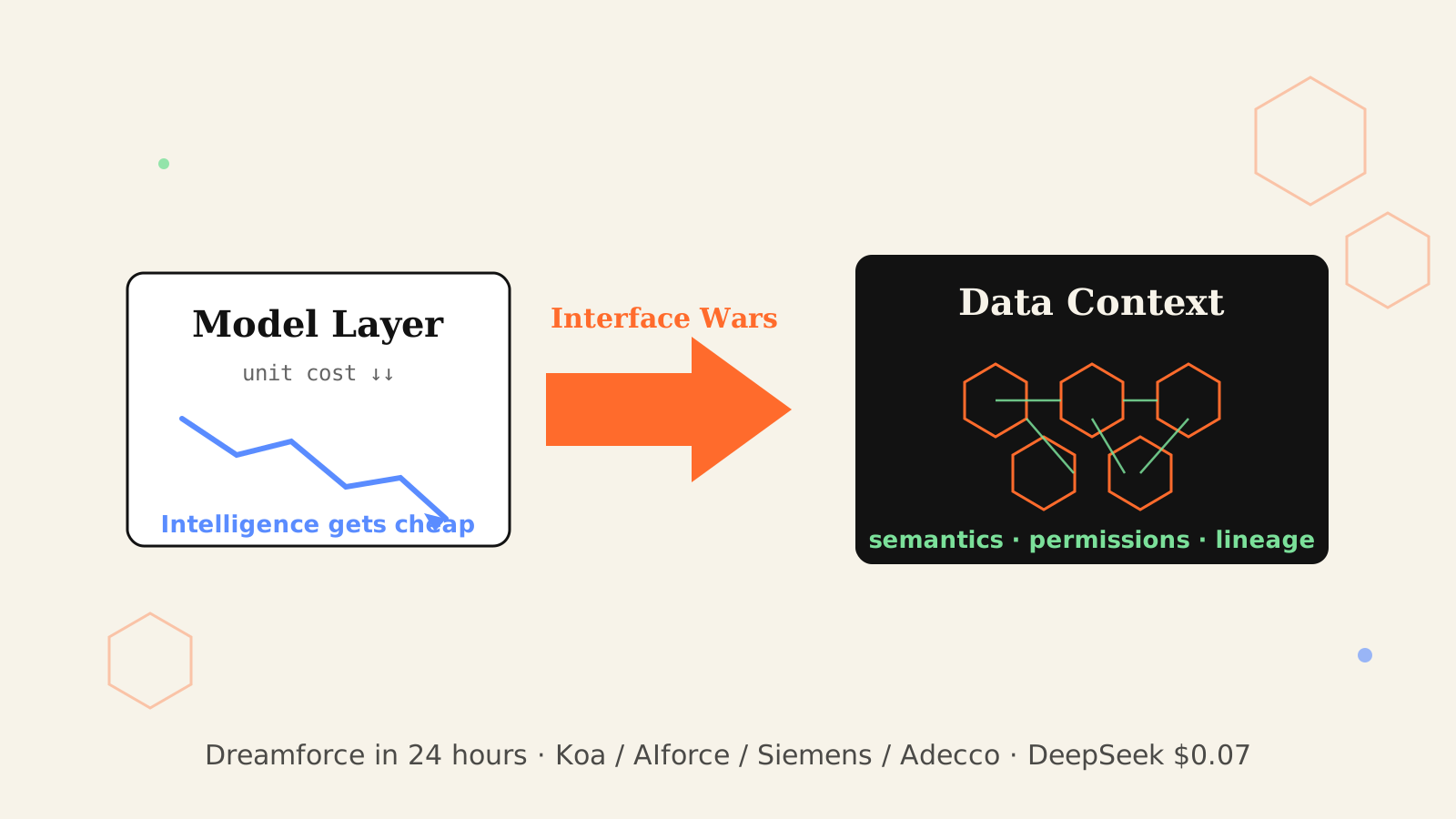
Here's the short version: everything that happened in enterprise AI over the past 24 hours points at the same trend — model capability is rapidly depreciating, while enterprise data context (who can safely hand AI the right data) is becoming the new competitive high ground. On September 15, Salesforce shipped four major announcements in a single day at Dreamforce, and DeepSeek reset the cost floor for agent tasks the same day. Put the two threads together and the picture is remarkably complete.
24 Hours, Four Announcements
September 15 was an unusually dense day at Dreamforce in San Francisco:
| Announcement | In one sentence | Why it matters |
|---|---|---|
| Koa reasoning model | Salesforce's first in-house enterprise reasoning model, built on NVIDIA's open-weight Nemotron | A major vendor stops depending on frontier labs |
| AIforce interface layer | Opens Salesforce data, workflows, permissions and governance to external AI surfaces | An official definition of the "AI-era interface" |
| Siemens × Teamcenter | Engineering knowledge flows directly into service and quoting workflows for 18,000 sellers | Agent-to-agent integration in industrial settings |
| Adecco global rollout | 27,000 employees across 40+ countries get an AI teammate | Hard evidence of agents at scale |
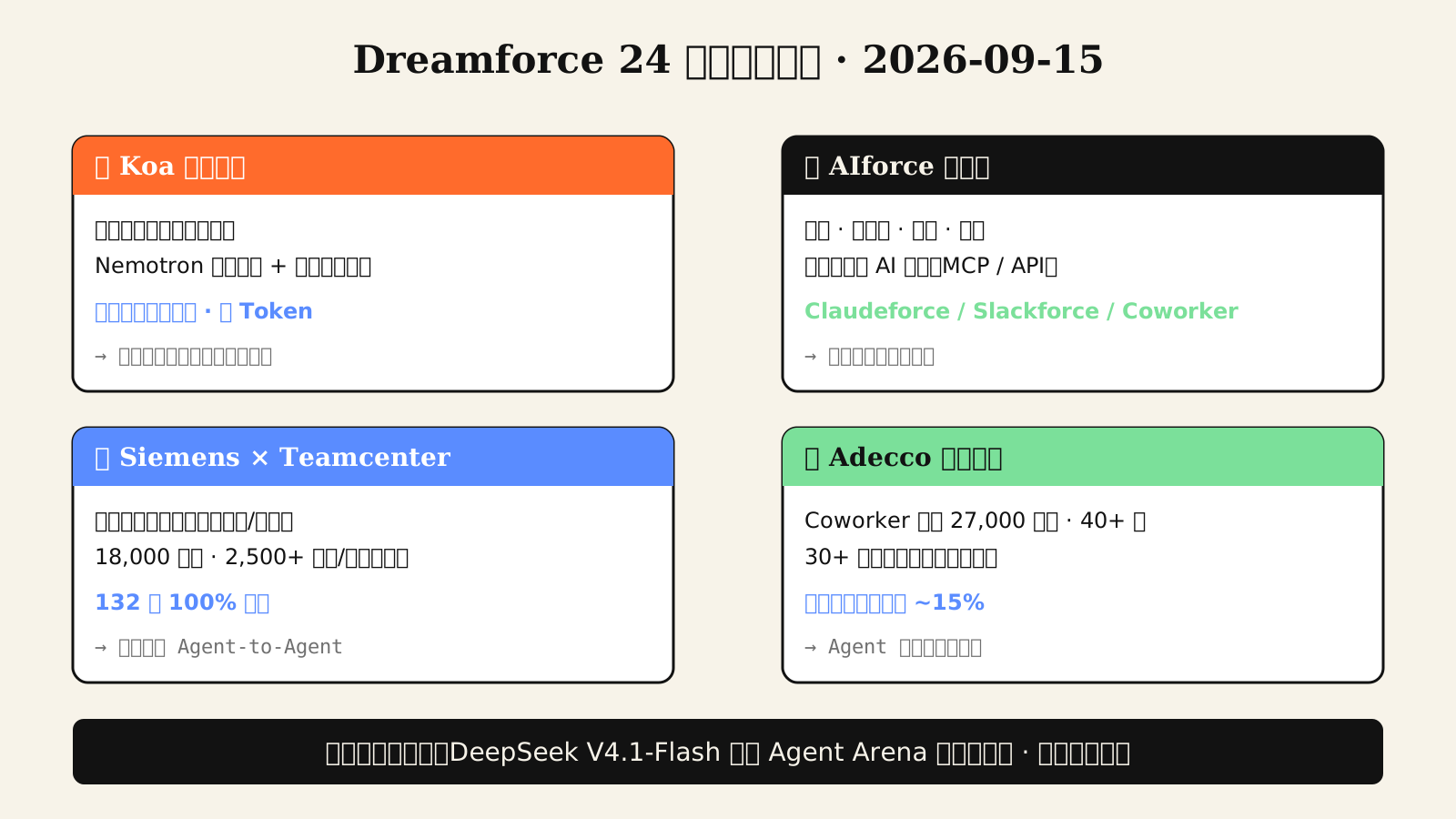
Any one of these is a product story. Together, they all point the same way.
Thread One: AIforce Wants to Be the Front Door to Enterprise Data
AIforce was the most strategically loaded launch of the day. Salesforce describes it as a "live interface layer" that lets people and AI agents use Salesforce data, workflows, business logic, permissions, security and governance from other work surfaces. It ships with three entry points: Claudeforce (a prebuilt MCP connection inside Claude), Slackforce, and Agentforce Coworker.
CEO Marc Benioff framed it as an interface revolution, comparing it to the shifts from DOS to graphical interfaces and then to mobile. The product logic is blunt: chat surfaces and models are interchangeable, but system records, permission rules and audit trails have to stay inside the enterprise. According to the launch materials, every AIforce request follows the permissions and business rules already configured in Salesforce, actions route back through Salesforce, and business data is handled under a zero data retention policy.
Translated into one sentence: the interface can live outside; the data and governance stay home.
Thread Two: What Koa Really Says — Models Are Depreciating
If AIforce answers "where does the interface live," Koa answers "how much is a model actually worth?"
Koa is Salesforce's first enterprise-grade reasoning model: an NVIDIA Nemotron open-weight base, fine-tuned jointly by both companies for sales, marketing and service work. Three details are worth chewing on:
- No real customer data in training. The fine-tuning set was entirely synthetic — simulated support agents, angry callers, deal-closing reps — with zero customer data ingested.
- The goal isn't general intelligence; it's token efficiency. NVIDIA says the reasoning architecture keeps token spend under control while hitting autonomy, fast first response and efficient inference.
- AI-gateway routing. Routine tasks go to task-specific small models, complex reasoning goes to Koa, and Claude or ChatGPT remain one routing decision away.
Salesforce's SVP of AI Jayesh Govindarajan put it plainly to TechCrunch: complex reasoning used to depend entirely on external frontier providers — "that changes now."
And it's not an isolated move. The same day, DeepSeek released V4.1-Flash (Max), which landed at #3 among open models on Agent Arena with a median task cost of $0.07 — roughly 68% cheaper than comparable models at similar success rates. NVIDIA's Jensen Huang, speaking at the same event, claimed open models grew from roughly 30% to about 70% of the market over the past year while closed-model token consumption rose 25-fold (his on-stage remarks, not an independently verified market measurement).
Read together: the cost of acquiring high-quality reasoning is collapsing. When "smart" stops being scarce, what becomes scarce instead?
Siemens and Adecco: The Answer Is Already in the Deployments
What's scarce is business-adjacent data context. The two flagship customer stories at Dreamforce are the best footnote to that question.
Siemens connected Agentforce to its Teamcenter Service Lifecycle Management software, pushing engineering-grade "product truth" straight into sales and service workflows: a technician can confirm the right spare part for a specific serial number before the first site visit; a rep only quotes upgrades that are technically valid and manufacturable. Siemens previously received more than 2,500 unqualified inbound leads a month; two collaborating AI agents now engage 100% of them across 132 countries. The announcement also cites industry analysis that aftermarket business grows roughly six times faster than new equipment sales, at about four times the margin.
Adecco rolled Coworker out to 27,000 employees in over 40 countries. Recruiters see candidate history, client context and business data in one interface — data that used to sit across 30+ systems, now unified by Data 360 into a single real-time profile. According to Adecco, agents deployed in its UK recruitment process have already delivered about 15% time savings.
Notice that both companies did the same thing right: they consolidated scattered data into a governed, semantically consistent, agent-ready context first — then let the agents loose.
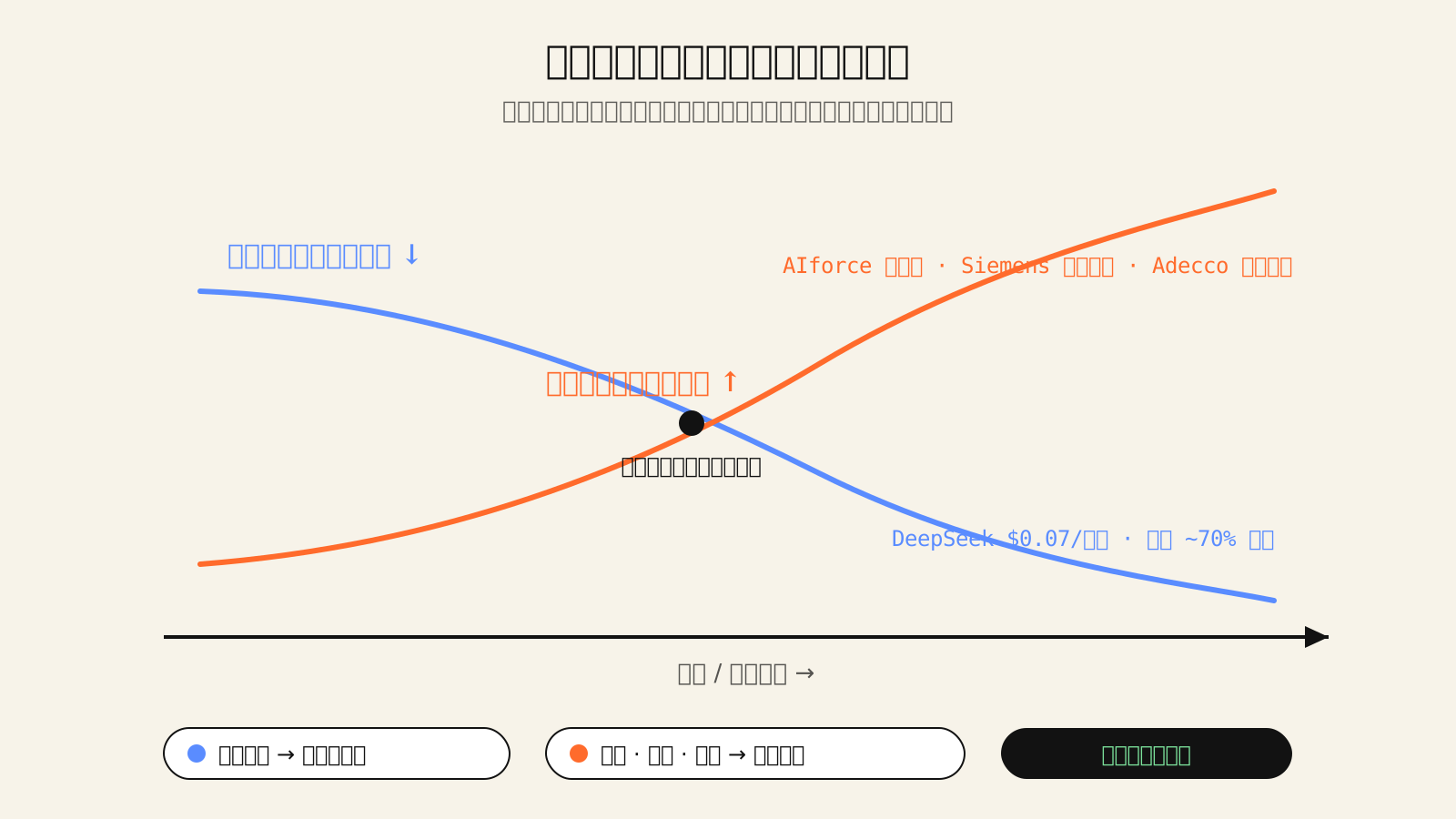
What This Means for Your Enterprise: Interfaces Change, Semantics Don't
Back to the opening question. The real lesson of the interface-layer war isn't "should you adopt Salesforce." It's three things:
First, don't bet on any single interface. Today it's Claudeforce; tomorrow it's another chat surface. Interface layers will iterate faster and faster. The thing worth locking down is your own data semantics.
Second, downgrade your model-selection anxiety. When an agent task costs $0.07 and open models hold seventy percent of the market, model differences matter less to business outcomes. But "two departments, two numbers for the same metric" is a semantic problem no model can solve — the ambiguity lives in your business, not in the model.
Third, shift budget from "buy a better model" to "govern your data context." Permissions, metric definitions, lineage — the unglamorous stuff is exactly what makes a layer like AIforce safe to open up in the first place. Whoever governs their data context well can plug into any new interface on day one.
This is the path we keep validating at OntiCards: turn database tables into data cards that carry business semantics, so metric definitions, field meanings and permission rules settle into the card layer instead of scattering across ad-hoc SQL. We've written more systematically about why the semantic layer decides the data-agent race — see The Semantic Layer: Where Data Agents Are Won and Designing for Model Fatigue.
Models get replaced every month and interfaces every quarter. But "how exactly do we calculate our refund rate?" will be the same question in five years. Governing that well outlasts any model you'll ever pick.
If you'd like to see how data cards turn enterprise tables into context that AI can safely use, reach out at hello@onticards.com to request a trial account.