Model Fatigue: A Data Foundation That Outlives Every Model
Four frontier models shipped in one week and CNBC coined it 'model fatigue'. Four design principles for a data foundation that outlives any model release.
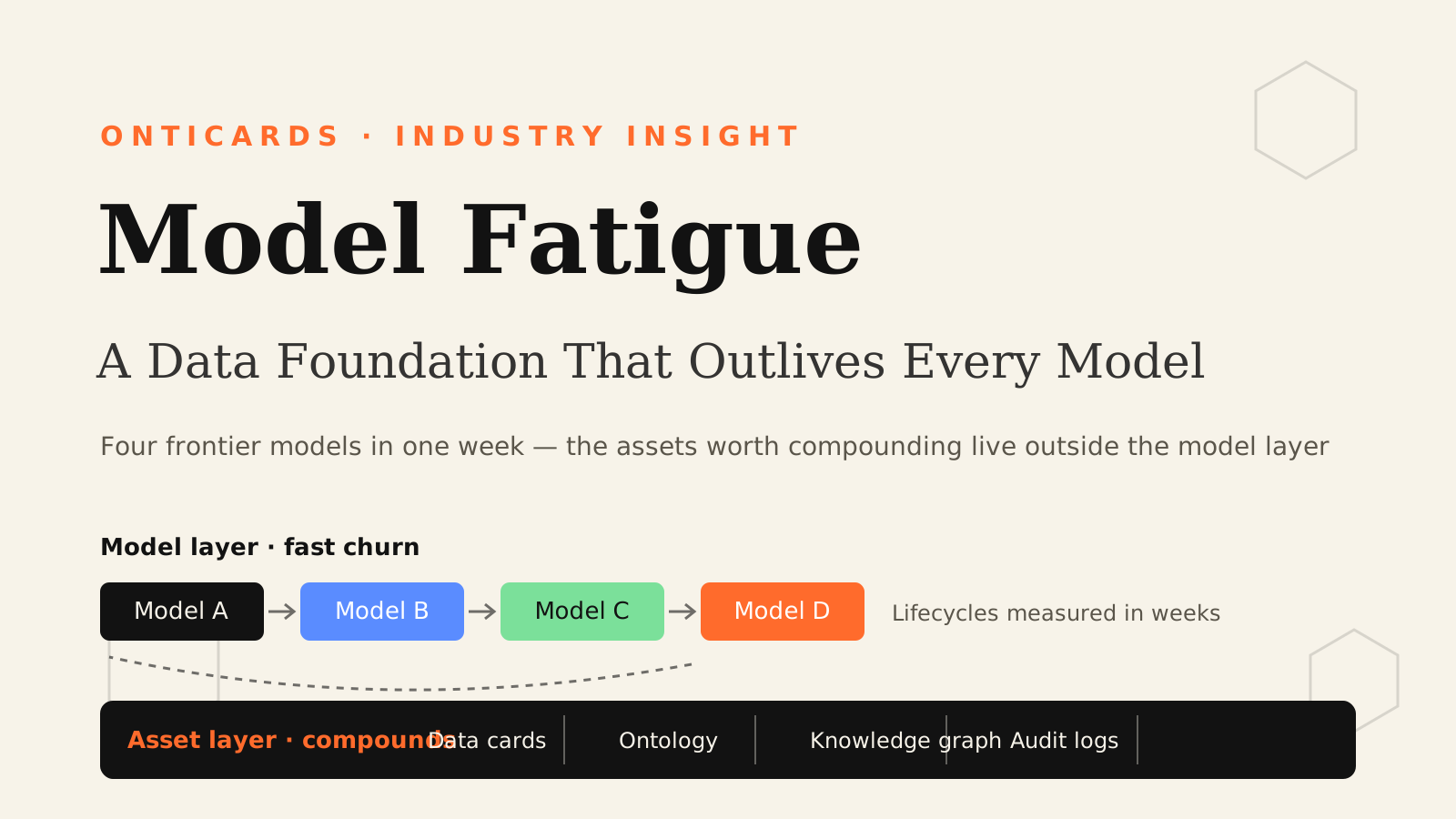
The past week may have been the most crowded week in LLM history: Anthropic, Meta, Google and OpenAI shipped new-generation models within three days, and CNBC gave the nonstop cadence a name — model fatigue. Our take is simple: enterprises don't need to chase every model release; they need a foundation where you swap the engine without touching the ground it stands on. Data cards, ontology semantics, knowledge graphs and audit logs are assets that must live outside the model layer to survive the churn.
Four Frontier Models in One Week
First, the replay. According to Silicon Report and CNBC, Anthropic released Claude Fable 5.1 and Claude Mythos 5.1 on Tuesday, September 1. Meta followed with Muse Spark 1.3 and Google with Gemini 3.8 Flash the next day. On September 3, OpenAI launched GPT-6 Astra. Four labs, one week, all major-version updates — a cadence the industry has never seen before.
| Model | Lab | Focus | Key numbers |
|---|---|---|---|
| Claude Fable 5.1 / Mythos 5.1 | Anthropic | Coding & knowledge work | Cached input tokens down 75%; typical workload cost down ~25% |
| Muse Spark 1.3 | Meta | Coding & agentic tasks | ~20% fewer tool calls, ~25% fewer tokens |
| Gemini 3.8 Flash | Coding & agents | Positioned on price-performance and speed | |
| GPT-6 Astra | OpenAI | Cybersecurity & computer use | 99.9% on ARC-AGI-3; $10/$50 per 1M input/output tokens |
The clustering is no accident. Sam Altman's half-joking explanation to CNBC was that "everyone got back from summer vacation." The sharper motive: both Anthropic and OpenAI are racing toward IPOs with private valuations near $1 trillion, and every release is a land grab for enterprise budgets. Gartner projects global AI spending to hit $2.59 trillion in 2026, up 47% year over year — every vendor wants a bigger slice.
The Evaluation Burden Lands on Buyers
The release race is the labs' spectacle; the cost is the buyers'. Two executives put it plainly:
- Suresh Vasudevan, CEO of Clockwork Systems: tracking each incremental model update consumes substantial compute, so his team sometimes evaluates only five out of ten candidate models for a given task.
- Zhen Lu, CEO of Runpod: "Model fatigue is a real thing. We are in an environment where there's just so much frothiness that you have to make noise."
The burden isn't just compute — it's benchmark rot. Take the WANDR research-agent benchmark: GPT-6 Astra scored 0.682 at $11.98 per task, the highest of any model tested — 13.5% above Fable 5.1 at 6.1% lower cost. Headlines like these live for a week before the next release rewrites them. Sourcing your technology decisions from vendor leaderboards means building procurement strategy on a price list that expires continuously.
What Deprecates, and What Compounds
Zoom out, and two more September stories read as a pair.
First, OpenAI said on September 6 that it has hit the "automated research intern" goal it set last fall: across its research organization, every human workday is now paired with 3.1 agent-workdays of effort; the median researcher by agent usage was spending over $600 per day of inference at API prices by mid-August. Second, Spotify's engineering blog disclosed that Portal, an internal routing tool, cut Claude Code token usage by 90% — bulk file reads go to cheap worker models, while reasoning and safety-critical context stay on the frontier model.
Both stories point at the same fact: agents are becoming a permanent workload in enterprise runtimes, and "cheap models for I/O, frontier models for reasoning" has graduated from prompt hygiene to architecture. Once models become pluggable components, model churn stops being frightening. What should be frightening is a system with its business logic, data semantics and permission rules hardwired into one specific model.
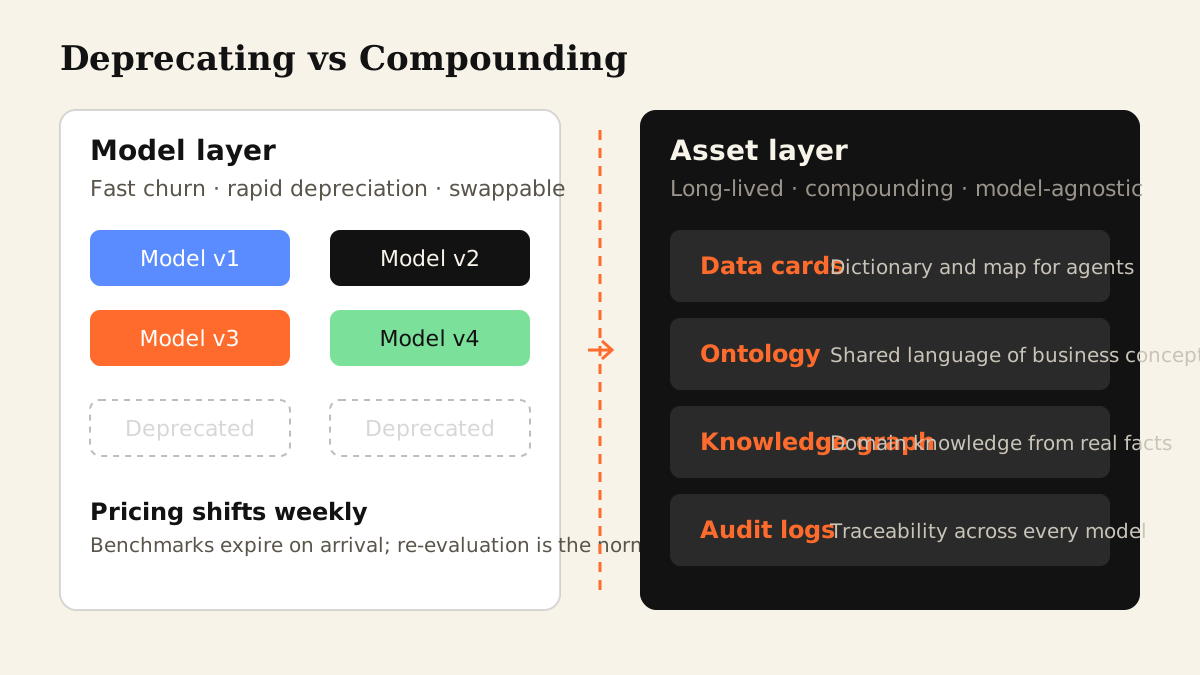
So the dividing line is clear. What deprecates: the models themselves — their capabilities, prices and leaderboard positions. What compounds: your data and knowledge assets — structured semantics over real business data, knowledge graphs extracted from business facts, and audit records consistent across every model you've ever run. These assets don't lose value when you swap models; they compound with every year of use.
Four Design Principles for a Churn-Proof Foundation
Combining this week's signals with what we see in enterprise deployments, here is how we break "swap the engine, keep the base" into four actionable principles:
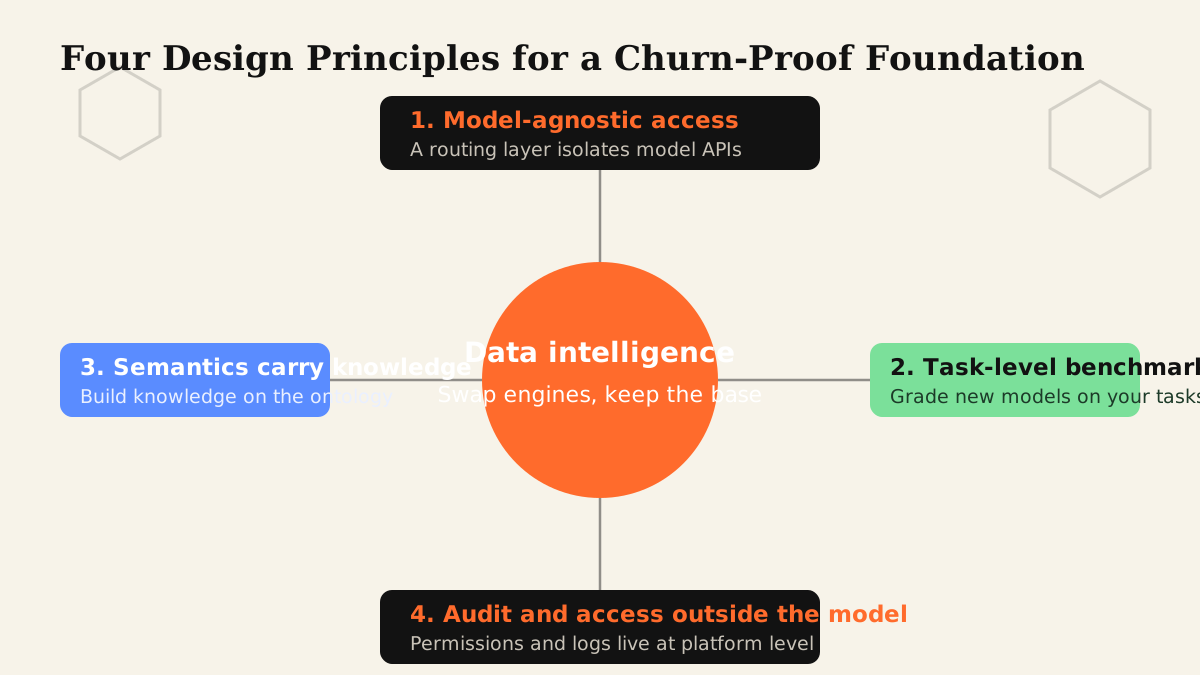
- Model-agnostic access: isolate vendor model APIs behind a routing layer, so data access, tool calls and orchestration logic never depend on a specific model. A new release becomes "one more option," not "a migration project."
- Task-level benchmarks: don't pick models off vendor leaderboards. Build a fixed evaluation set from your own high-frequency tasks — say, 50 common data Q&A scenarios — and run every candidate through it to get a verdict that reflects your business.
- Semantics carry the knowledge: business concepts, metric definitions and table relationships belong in data cards and the ontology, not in one model's prompt. Models can change weekly; a semantic layer won't need a rewrite for three years.
- Audit and access control outside the model: who accessed which data through which model, and when — these audit records must live at the platform level. Models retire; compliance records need to last a decade.
These four principles are exactly how OntiCards is built: data cards serve as the dictionary and map for agents, an ontology unifies business language, and the agent ecosystem plus skill library carry execution logic — all decoupled from any specific model. For our customers in manufacturing, finance and energy, weekly model releases stop being a source of anxiety and become a low-cost option to evaluate.
Model fatigue isn't going away — IPO timelines guarantee the cadence only gets faster. But the question enterprises actually need to answer was never "which model should we pick." It's "when we're on our fifth model, what remains of my data and knowledge?" Build the answer outside the model layer, and the churn becomes a tailwind instead of a threat.