OpenAI's Data Agent: the Real Battleground Is Semantics
OpenAI's Data agent plugs ChatGPT Work into enterprise warehouses, but accuracy collapses to 21% on enterprise schemas. The bottleneck is semantics, not models.
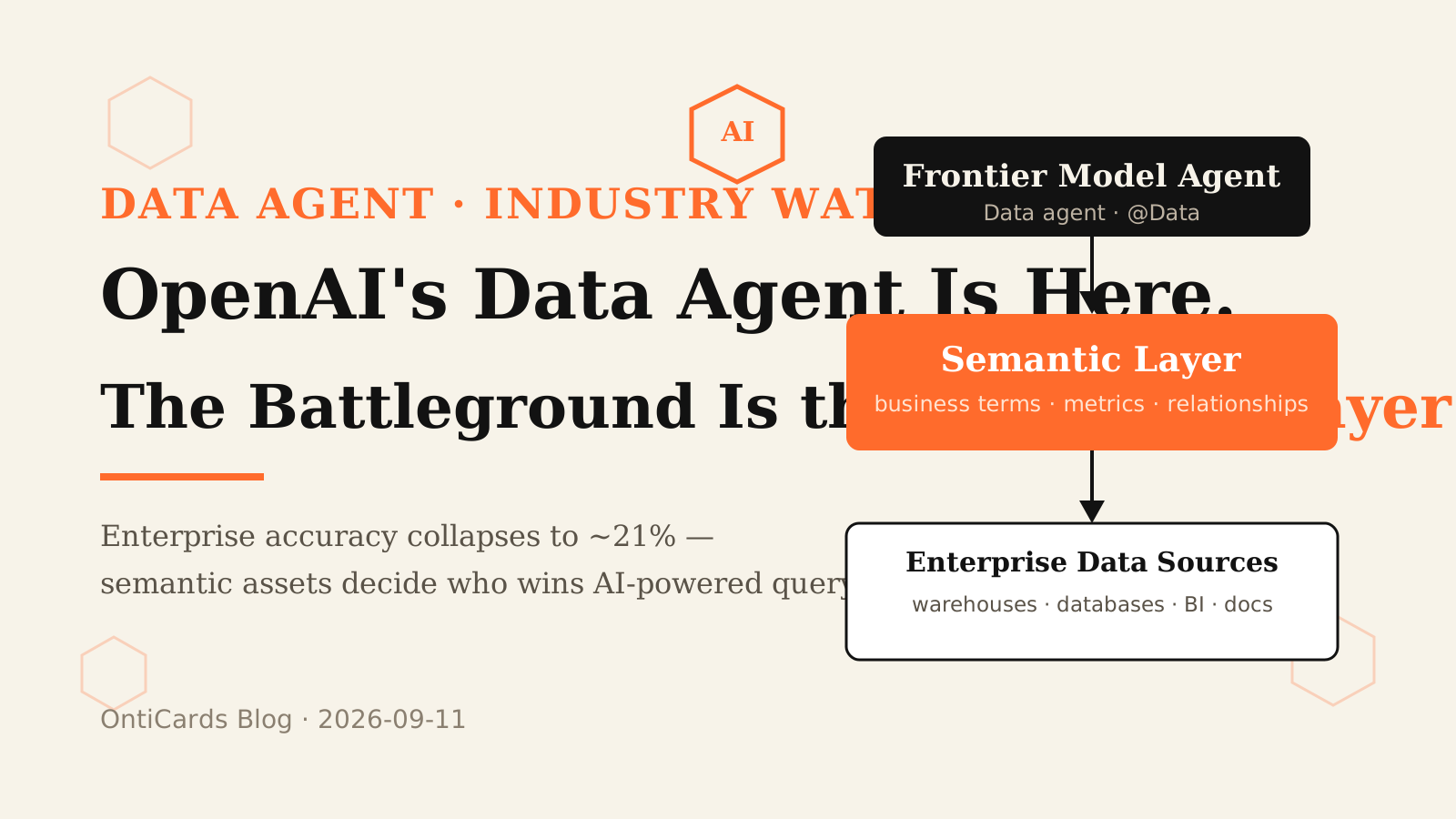
The headline from this week: on September 10, OpenAI launched a Data agent inside ChatGPT Work that connects directly to enterprise data sources. But the most important part of the announcement isn't the model. It's the quiet admission in OpenAI's own product notes that an AI agent can only understand company data once it is grounded in a semantic layer and enterprise governance. Model capability is no longer the scarce resource. Your organization's business context is.
What OpenAI actually shipped
Per OpenAI's announcement (as covered by Unite.AI), the Data agent is invoked with @Data in ChatGPT Work and connects to approved sources: Amazon Redshift, Google BigQuery, Snowflake, Databricks, MongoDB, ClickHouse, and Datadog, plus files from Google Drive and SharePoint. Ask "why did sales slow last week" and the agent writes the queries, joins the tables, and produces an interactive dashboard you can edit, share, and refresh.
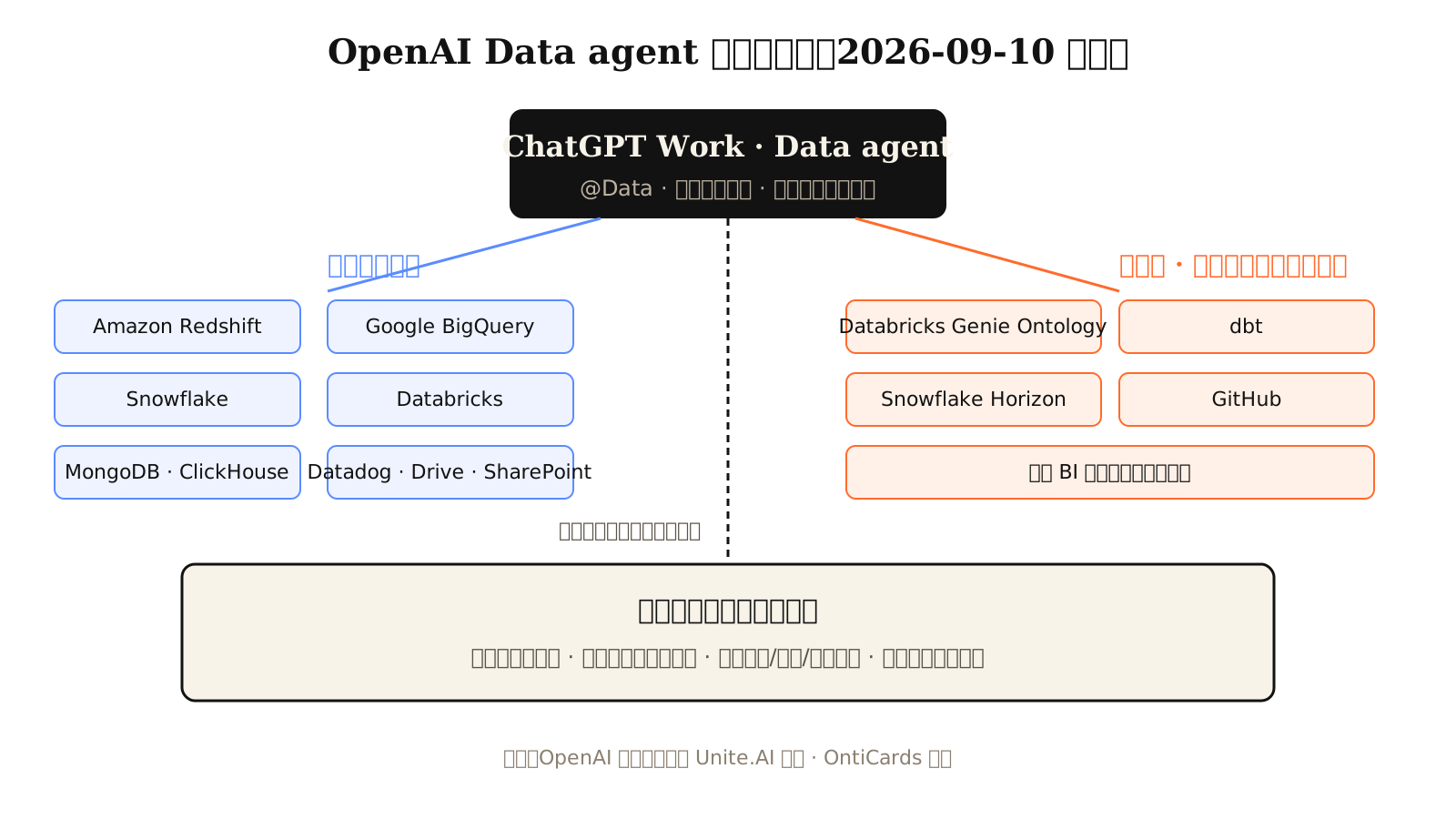
Internal adoption is telling: OpenAI says nearly its entire product team and more than two-thirds of its go-to-market organization already use data agents, and Alpha customers include NTT Data, Thermo Fisher, and ServiceTitan. NTT Data reports that "many non-engineers, particularly in sales and corporate functions, have been able to build and update their own dashboards using plain language."
The benchmarks were never about model quality
Here's the line most coverage skipped: to interpret company data, OpenAI requires the agent to apply "an organization's own business terms, metric definitions, custom calculations, and data relationships" — sourced from semantic layers like Databricks Genie Ontology, dbt, and Snowflake Horizon. In other words, even the best model company concedes that raw tables plus a frontier model isn't enough.
The public evidence says the same thing. Summarizing Alex Merced's review of context engineering for data agents:
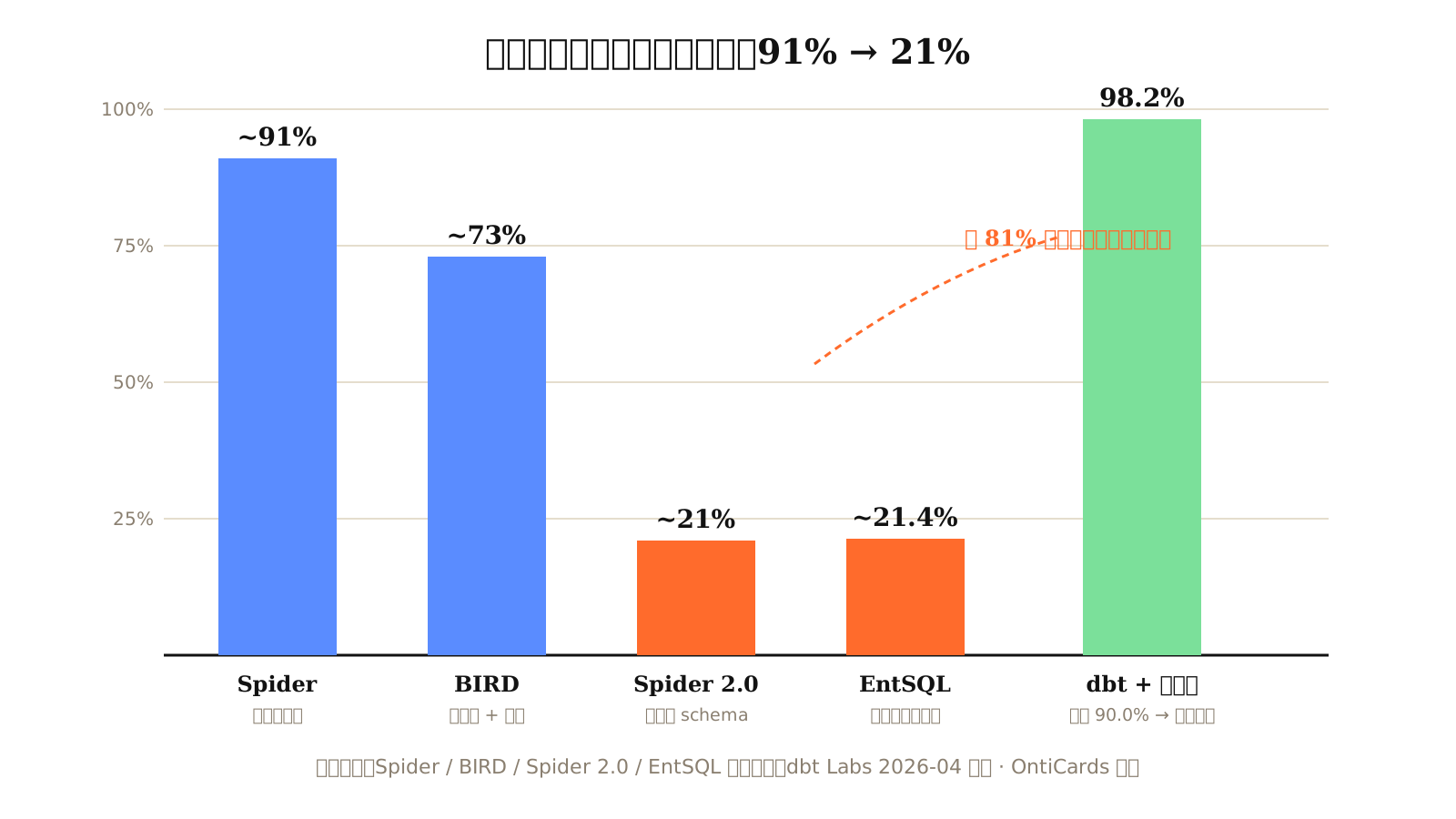
| Benchmark / setting | Data shape | Best result |
|---|---|---|
| Spider (academic) | Small, clean schemas | ~91% |
| BIRD | Real databases, dirty values | ~73% |
| Spider 2.0 (enterprise) | 1,000-column tables, multiple dialects, multi-step | ~21% |
| EntSQL | Requires internal metric definitions | 15.9%–21.4% |
Same models, different data shape: accuracy falls from 91% to 21%. Roughly 81% of production text-to-SQL failures are schema and semantic errors — the SQL is valid, it just queries the wrong column or misses the business definition. And dbt Labs' April 2026 benchmark showed the fix: two frontier models scoring 90.0% and 84.1% on bare tables rose to 98.2% and 100% once grounded in a semantic layer.
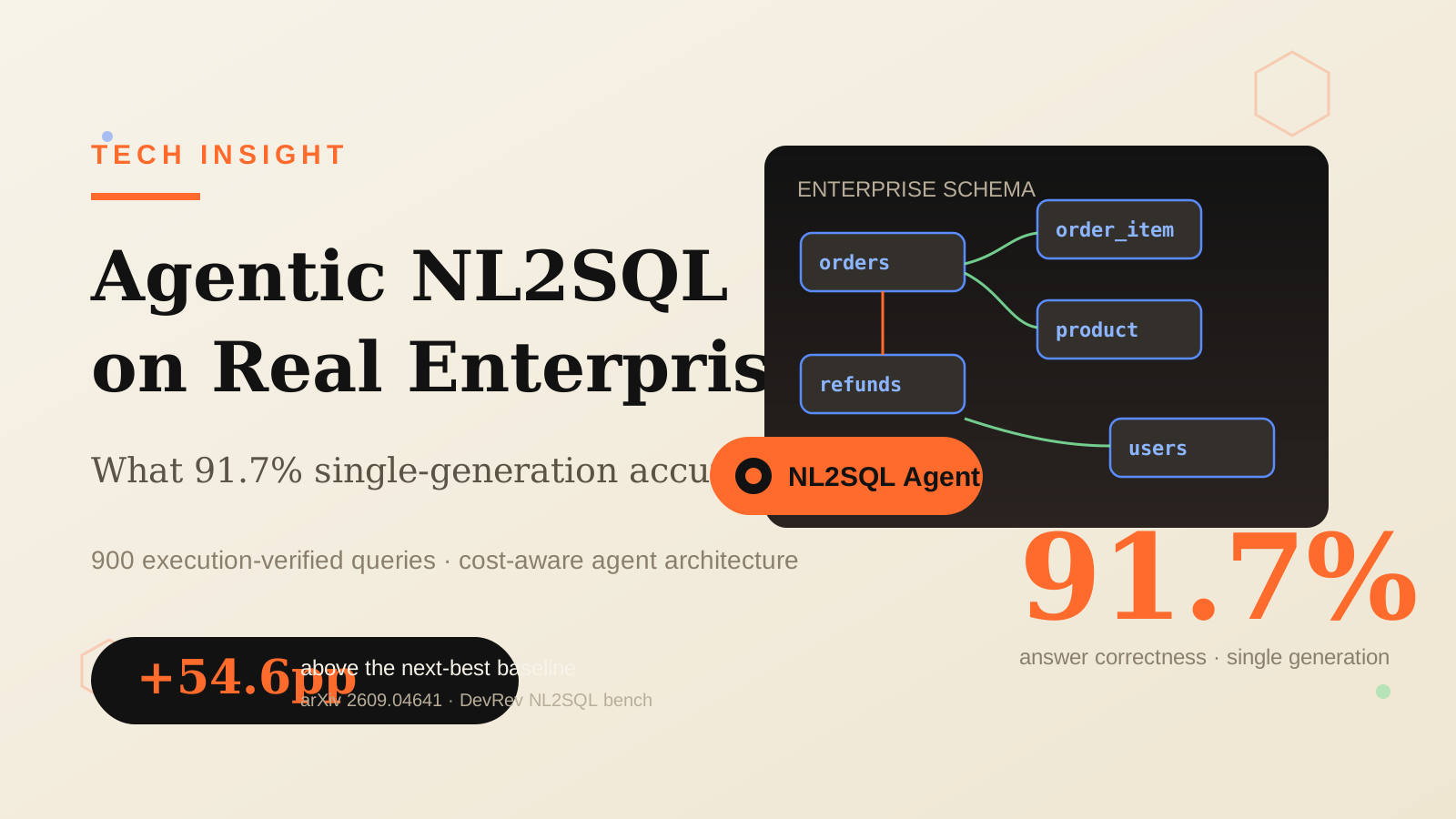
We made the same argument in our semantic-layer data agent architecture and last week's NL2SQL analysis: spend your budget on semantic modeling, not on stacking inference tokens.
The confidence gap: everyone can query, nobody can govern
Self-serve querying is a double-edged sword. Also on September 10, Harness published The State of Agent DLC 2026, a survey of 700 engineering leaders, showing that enterprise confidence in AI agents systematically outruns the controls backing it:
| Dimension | Confident | Actually have the control |
|---|---|---|
| Complete agent inventory | 77% | 44% (active discovery tooling) |
| Testing would catch a production failure | 74% | 19% (automatic release gate) |
| Could disable a misbehaving agent in <15 min | 76% | 33% (instant kill switch) |
| Full picture of true spend per agent | 74% | 60% still overran budget |
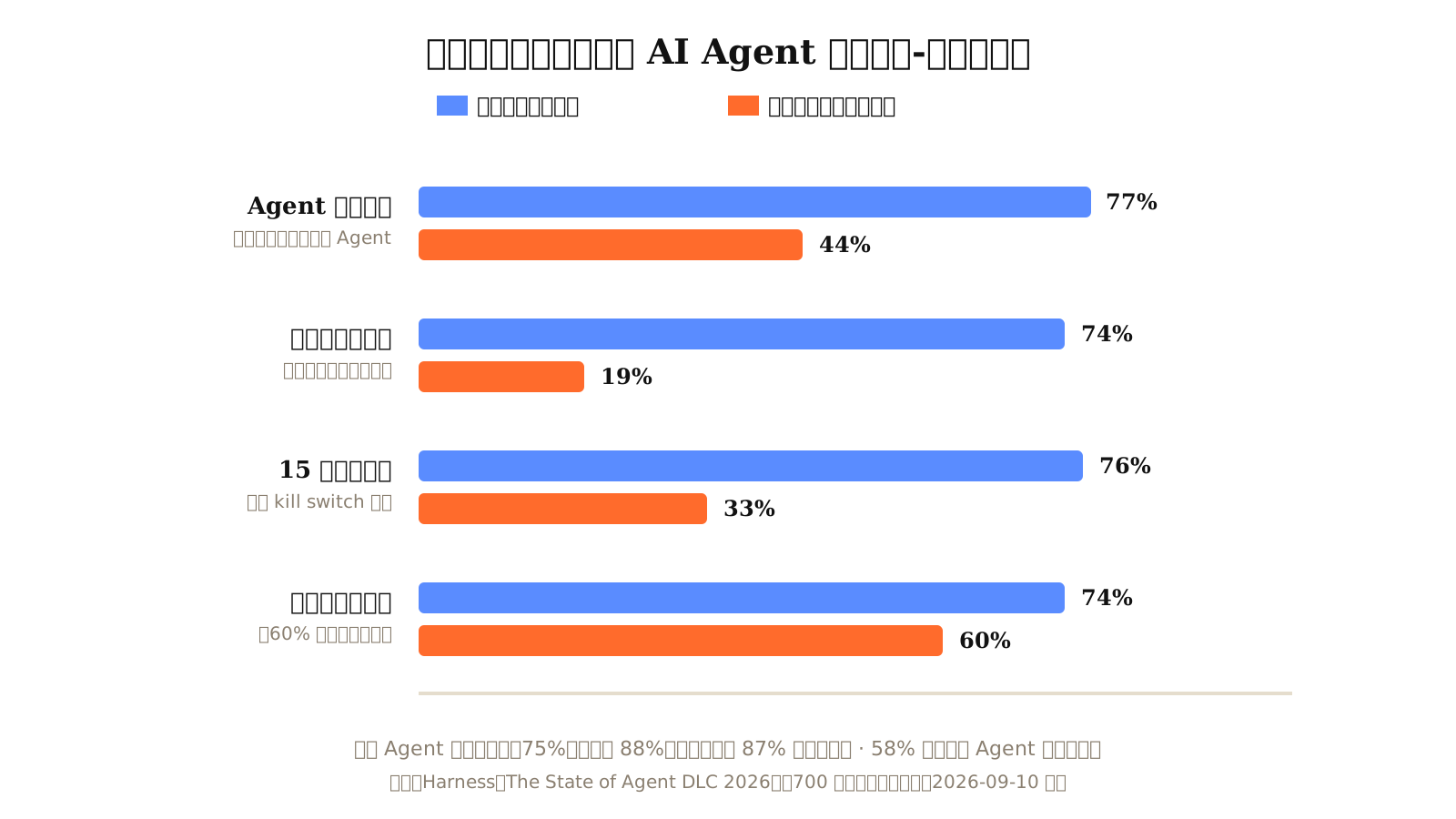
The starkest detail: organizations confident their agents are secure (75%) had security incidents at almost the same rate (88%) as the overall sample (87%), and 58% of organizations saw production incidents per 100 changes increase after deploying AI agents. When querying becomes a one-sentence operation for every employee, an ungoverned environment doesn't amplify productivity — it amplifies errors.
The industry is converging on the same response. Salesforce unveiled its six-capability Trusted Enterprise AI Harness the same day, pulling context, governance, and security out of individual agents into a reusable enterprise substrate. EY's Agentic Enterprise Blueprint, presented at CIFTIS, argues that ~70% of AI's potential value lives in cross-departmental workflows — and that 74% of enterprises haven't crossed the scaling gap yet.
The OntiCards take: own your semantic assets
Put the signals together and a clear picture emerges: the data-agent race is shifting from "whose model is smarter" to "who owns the enterprise's semantic assets". Business terms, metric definitions, field meanings, table relationships, quality rules — models can't learn these. They have to be built inside the organization.
OpenAI's architecture naturally hosts your business context in a third-party SaaS. OntiCards takes the opposite route: data cards distill schemas, field meanings, business definitions, and relationships into an addressable "data dictionary plus map" that query agents navigate; business term libraries give "active customer" and "valid order" one consistent definition across departments; data quality checks run before anyone asks a question. The entire chain supports on-premise deployment and Xinchuang (domestic IT stack) databases, so your semantic assets never leave your perimeter. Related reading: our data-agent market analysis and agent auditability deep dive.
If you're evaluating what "everyone can query the data" actually requires on top of your own stack, reach us at hello@onticards.com, or see how card-driven data assets work on the product page.