The Next Agent Bottleneck Isn't Models. It's Memory.
OpenAI and Salesforce race on agent orchestration. The real frontier is Iyuno CLOE's persistent ontology graph—memory that compounds, not tokens.
The most interesting thing in agentic AI this week wasn't another stronger model. It was a quiet shift in where the competition lives: for long-horizon agents, the decisive question is moving from "how do you orchestrate" to "what do you remember, and for how long." OpenAI turned orchestration into a public API, Salesforce stretched agent goals across weeks, and Iyuno—the world's largest media localization company—published the third piece of the puzzle: a persistent ontology graph that grows with every task. Here's what these three signals mean, and a practical question for any enterprise team: what kind of ontology graph does your data agent actually need?
Three Signals in 48 Hours
Per AI Agent Store's September 13 daily briefing and follow-up coverage, three mutually reinforcing stories landed within two days:
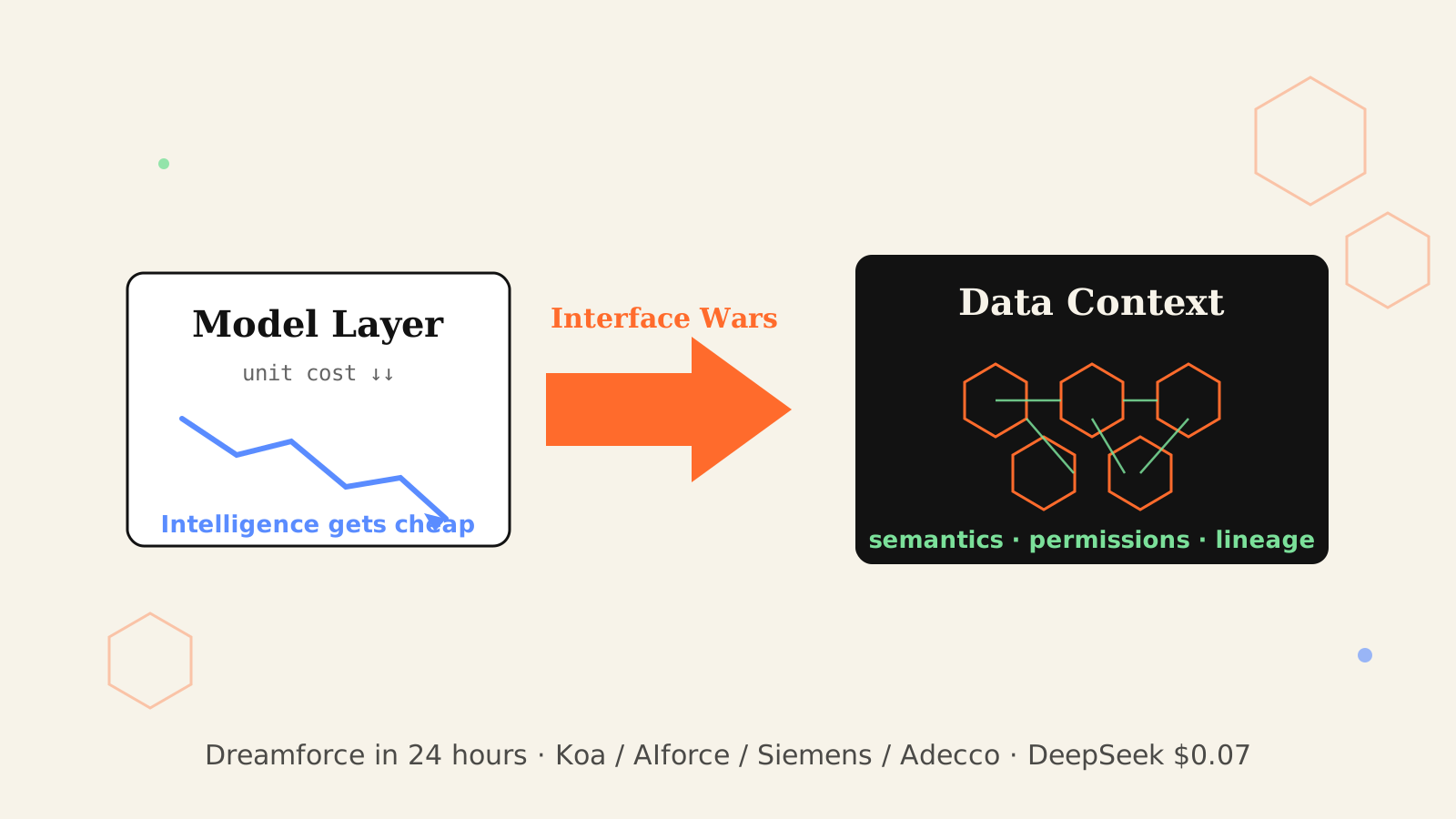
First, OpenAI commoditized orchestration. The Agents API entered public beta, bundling managed orchestration, long-running sessions, and context management, with sandbox compute from OpenAI, customer infrastructure, or partners like Vercel and DigitalOcean. The scaled agent infrastructure behind ChatGPT Work also went public—spinning up an agent now takes under a minute. Translation: orchestration alone is no longer a moat.
Second, Salesforce stretched the agent clock to weeks. The company shipped seven named Agentforce agents—Casey, Paige, Marshall and co.—and its outbound-sales agent Hunter became the first to run on a new long-horizon runtime, pursuing goals over weeks instead of a single chat session. Multi-Agent Orchestration reached general availability alongside.
Third, Iyuno published CLOE's Contextual Memory architecture—and the contrarian take behind it. The company detailed the multi-agent engineering already running in production across its commercial suite (CLOE Enterprise, Sub, Script, Dub, Live). Its thesis: for specialized domains, bigger models and more compute don't buy the thing that actually matters.
The Cost Paradox of Long-Horizon Agents
Read together, all three stories point at the same tension: agent task horizons are stretching, but the economics of context windows can't keep up.
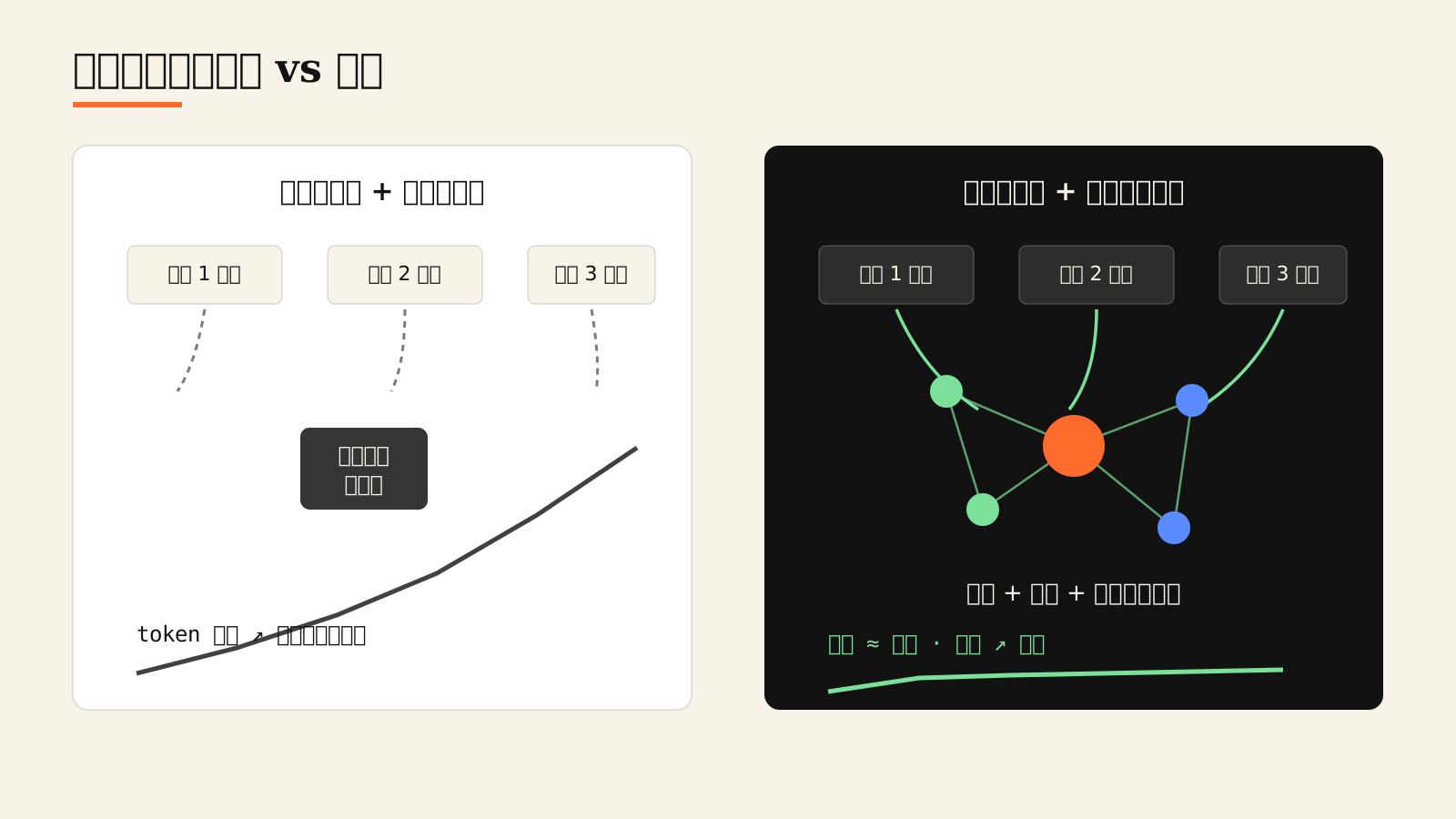
The default pattern—one monolithic model swallowing raw data, conversation history, and tool outputs—works fine for single-turn Q&A. Stretch the task across days or weeks and it breaks: every inference pass re-reads the full history, so token spend grows linearly (or worse) with task duration. And no window is infinite; once early context gets truncated, the agent "forgets" and repeats the same mistakes.
Iyuno founder and CEO David Lee put it bluntly: for a specialized domain like entertainment, scale doesn't buy narrative continuity. Their answer was to run specialized agents on "precise, high-density context," with a footprint that "doesn't grow with catalog size"—every title they process makes the graph more capable, not more expensive to run.
The CLOE Playbook: Three Principles Worth Stealing
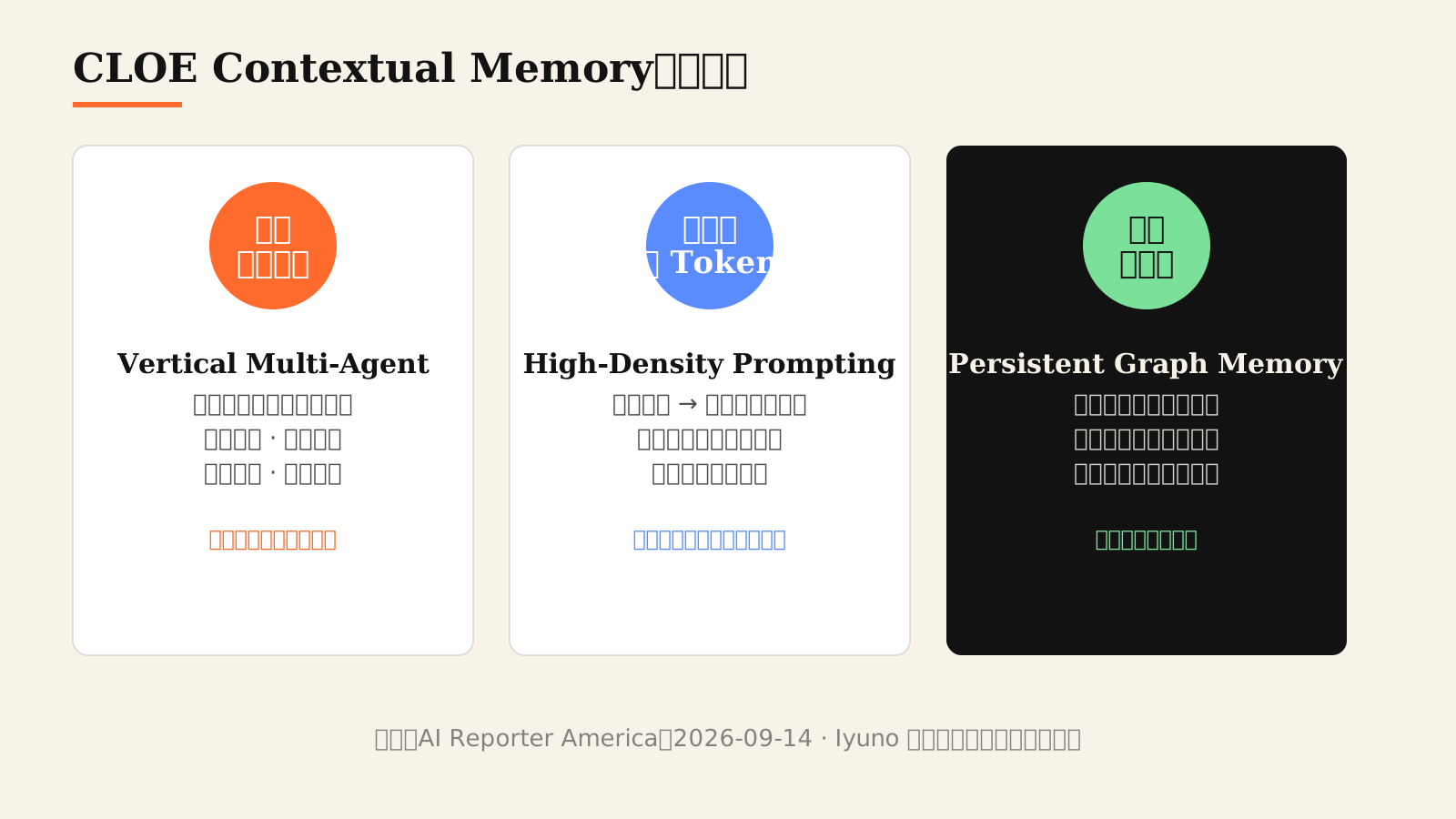
CLOE's Contextual Memory rests on three principles, each a useful self-check for enterprise data teams:
- Vertical multi-agent orchestration. Not one monolithic model, but a network of hyper-specialized micro-agents—character relationship mapping, emotional intent, prosodic matching, brand compliance—coordinated by an upper layer.
- High-density, low-token prompting. Raw video, audio, and scripts are synthesized into a structured knowledge graph first; agents work from compressed, high-signal context vectors instead of raw inputs, cutting per-title token consumption sharply.
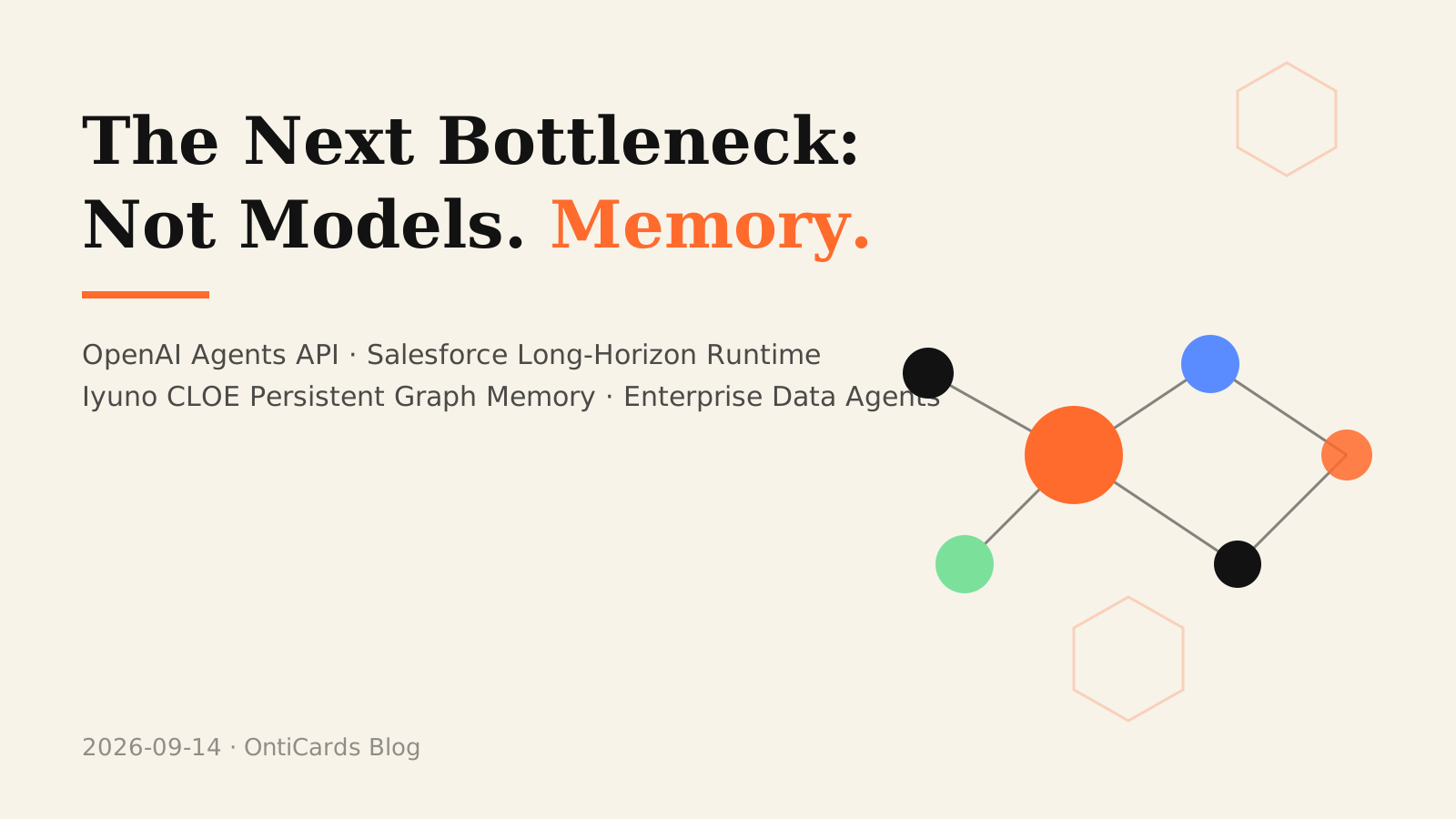
- Persistent graph memory. The key one: agent outputs are not discarded after each task—they converge into a persistent ontology graph, so understanding compounds across titles, seasons, and franchises while inference cost doesn't.
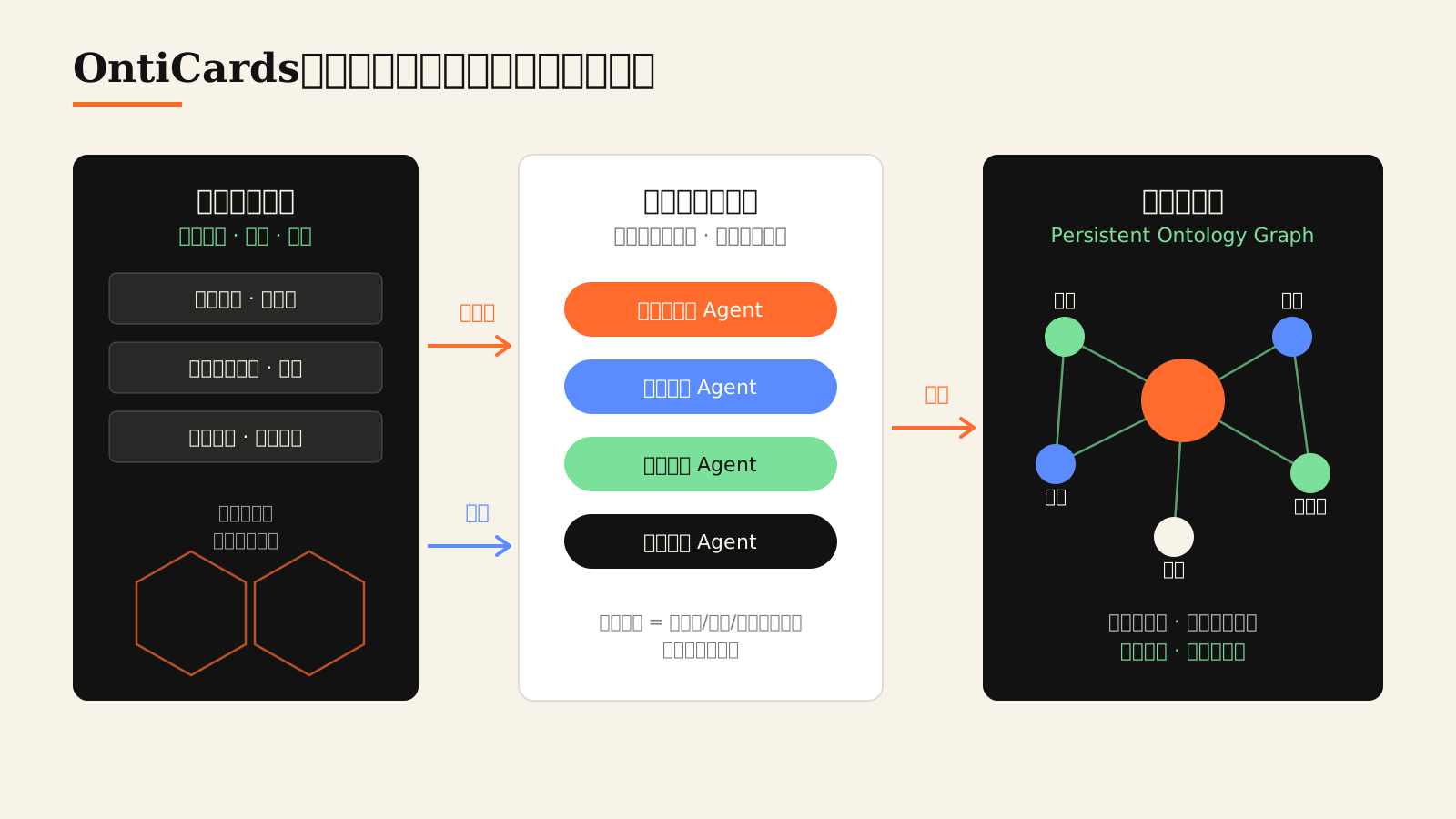
The third principle deserves its own paragraph. "Memory" is an overused word in this space: conversation history is memory, vector retrieval is memory. But both share the same flaw—they store fragments, not structure. An ontology graph is different: when an agent finishes a task, its output isn't a log entry; it's a graph node with entities, relations, and semantics that every subsequent task can reuse. Understanding compounds. Cost doesn't.
What Kind of Ontology Graph Does an Enterprise Data Agent Need?
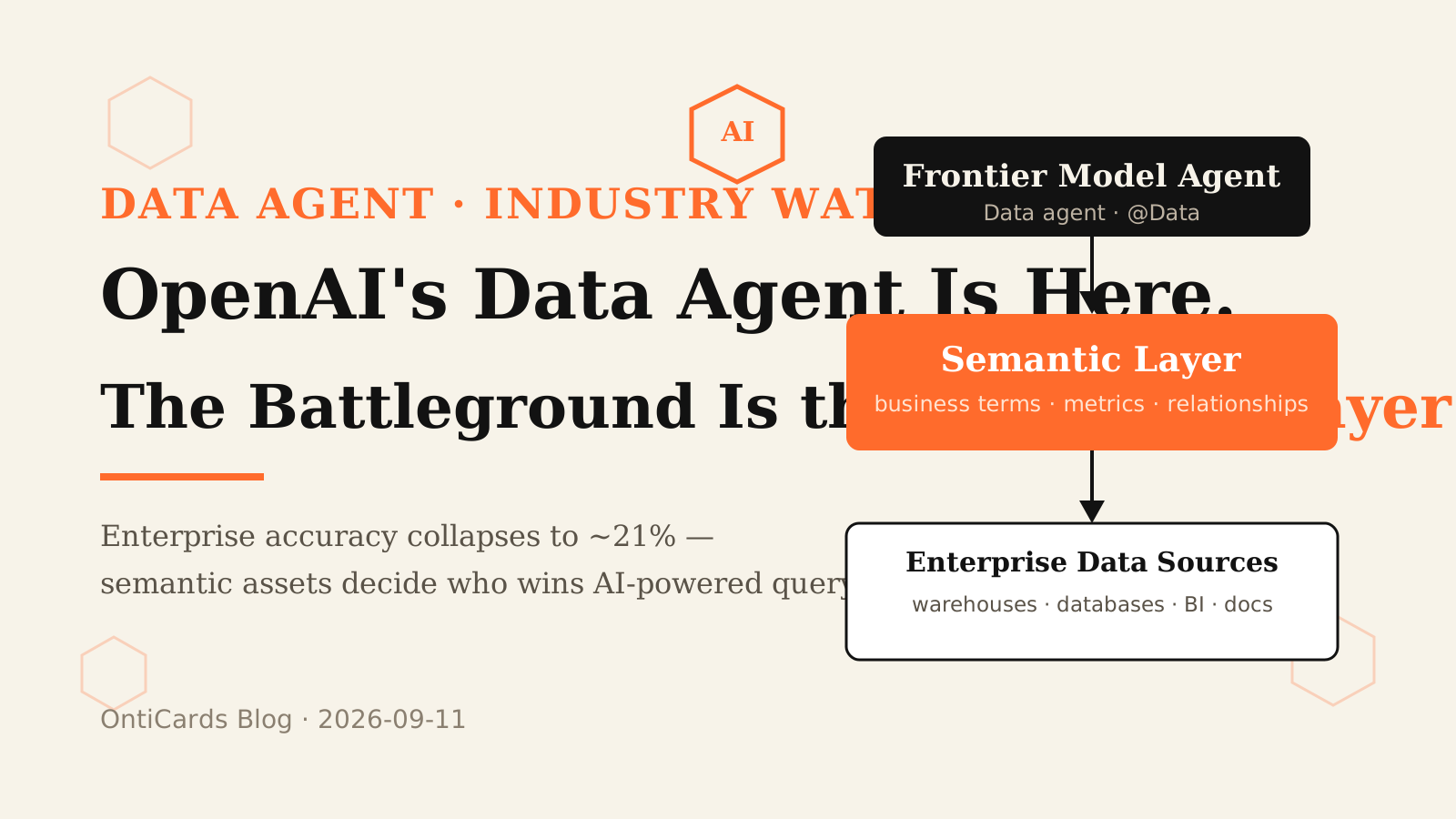
Map CLOE's playbook onto enterprise data, and the conclusions line up almost exactly with the path OntiCards chose from day one. Data Cards act as the agent's data dictionary, map, and navigation layer—recording where data lives, how to read it, what it means, and how it relates, rather than the business records themselves. Domain expert agents fetch data autonomously via the cards, and their results are written back into the ontology for the next task to reuse.
The two routes compared:
| Dimension | Monolithic model + context stuffing | Ontology graph + specialized agents |
|---|---|---|
| Context source | Re-read full history every turn | Read high-density structured semantics only |
| Understanding between tasks | Discarded when the task ends | Consolidated into the graph, reused across tasks |
| Cost curve | Grows with task duration / data volume | Doesn't compound with catalog size |
| Error recurrence | Repeated after "forgetting" | Fix once, correct everywhere |
| Auditability | Buried in conversation logs | Graph nodes are traceable by design |
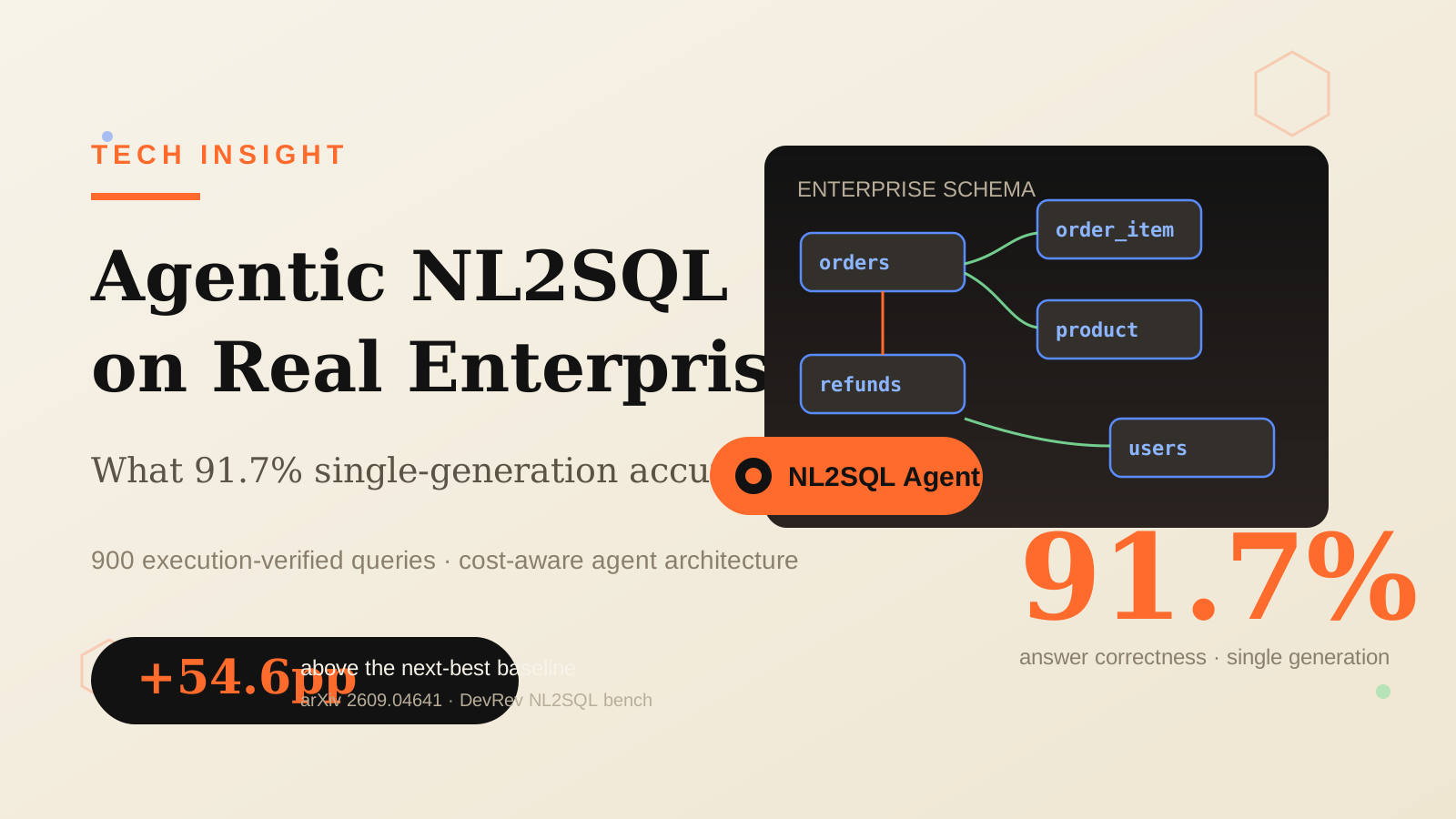
One caveat: you can't buy an ontology graph off the shelf. It takes ongoing governance—terminology alignment, relation curation, quality monitoring—which is why we keep stressing in earlier posts on semantic layers for data agents and the architecture truths behind NL2SQL on real enterprise data that semantic infrastructure is a marathon, not a one-time delivery. The same goes for runtime boundaries: as we covered in agent isolation and auditability, memory consolidation must ship with governance, or what compounds isn't just understanding—it's risk.
Three Recommendations for Enterprise Teams
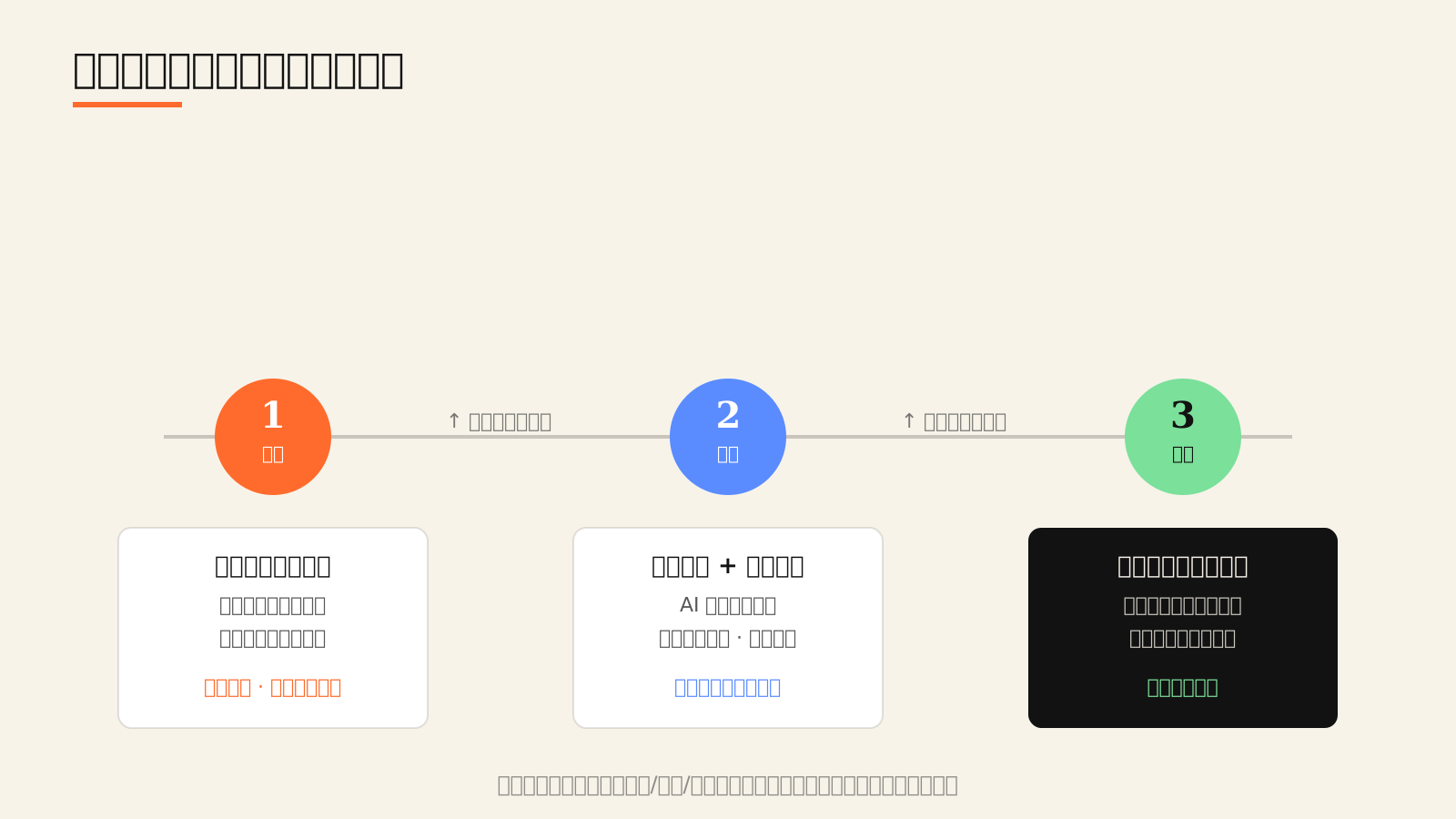
Against this week's signals, three concrete moves for teams planning data agents:
Buy orchestration like a commodity; build memory like an asset. The Agents API beta means orchestration, sandboxing, and session management will keep getting cheaper and more standardized. What differentiates you is whether the structured understanding your agent produces on task N is reusable by task N+1.
Add a "where does memory go" question to your agent RFP. Ask: after a task ends, where do the extracted entities, relations, and conclusions live? In what structure? How does the next task query them? If the answer is "chat history" or "a vector store," be skeptical about cost and consistency in long-horizon scenarios.
Start with one small graph—but model the ontology from day one. You don't need an enterprise-wide digital twin before starting. Pick one high-frequency domain (orders and inventory in e-commerce, say), stand up the Data Cards and ontology relations, and let expert agents write back as they work—the graph grows itself. That's how OntiCards lands in manufacturing and energy: ontology modeling as the kernel, with understanding compounding as the system gets used. Curious how this fits your stack? Reach us at hello@onticards.com.